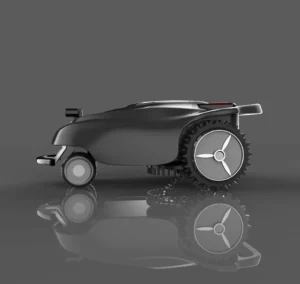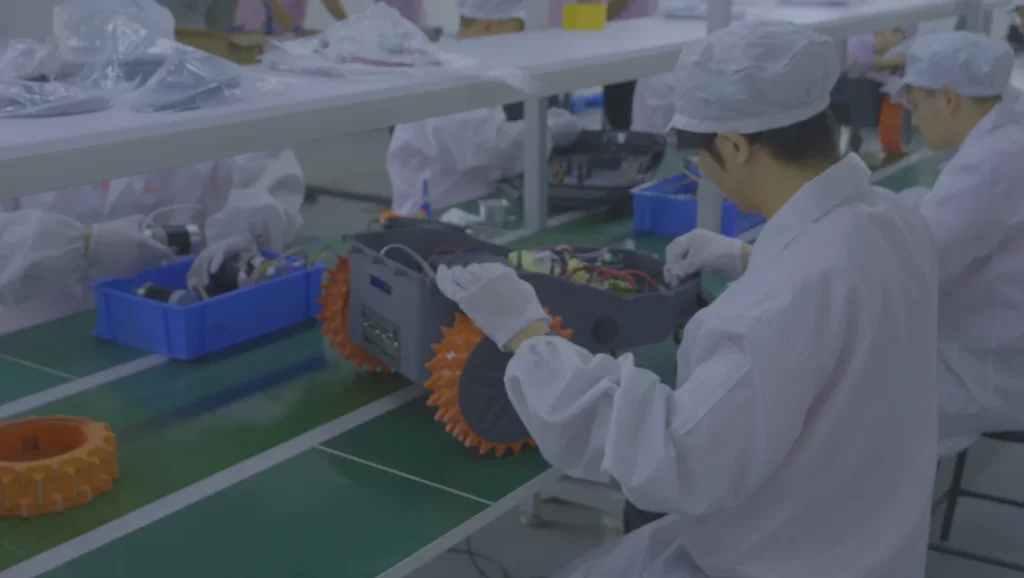









Robotic mowers offer a more efficient approach to golf course maintenance. However, because fairways, roughs, tee boxes, and putting greens have different mowing requirements and terrain conditions, not every area is equally suited to robotic mowing.
So, which areas of a golf course are best suited for robotic mowers? This guide explores the mowing requirements, application benefits, and limitations of robotic mowers across different golf course areas, helping you find the right automated mowing solution for your facility.
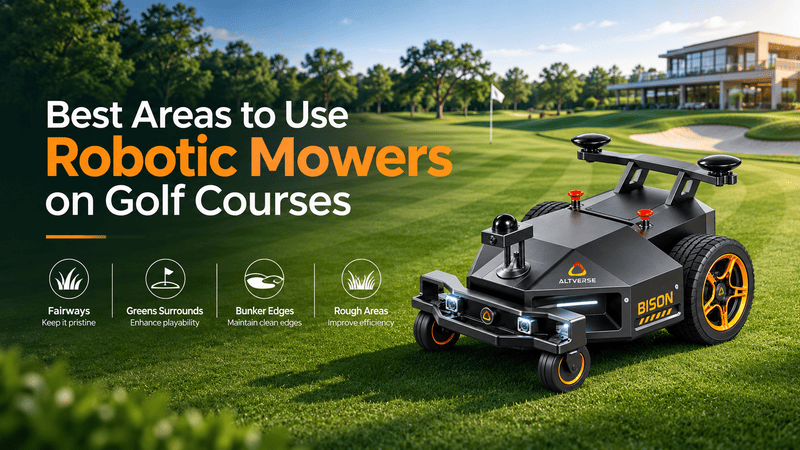
Robotic Mower Suitability by Golf Course Area
Different areas of a golf course vary considerably in cutting height, mowing frequency, and terrain conditions. As a result, they require different capabilities from robotic mowers. Generally, primary roughs, semi-roughs, driving ranges, and clubhouse lawns are good starting points for automated mowing. Fairways, tee boxes, and green surrounds, on the other hand, require greater cutting precision, lower cutting heights, and more accurate navigation.
The table below compares the mowing requirements and robotic mower suitability of major golf course areas, helping you identify where to prioritize deployment and which equipment capabilities matter most.
| Golf Course Area | Robotic Mower Suitability | Typical Cutting Height | Typical Mowing Frequency | Key Operating Requirements |
|---|---|---|---|---|
| Primary Rough | Priority area for evaluation | 30–50 mm | 1–2 times per week | Large-area coverage, slope handling, and obstacle avoidance |
| Intermediate Rough (Semi-Rough) | Priority area for evaluation | 25–38 mm | 1–2 times per week | Precise boundary control and maneuverability in narrow areas |
| Campo de prácticas | Priority area for evaluation | Depends on area requirements | As needed | Golf ball collection and appropriate mowing schedules |
| Clubhouse Lawns and Landscape Areas | Priority area for evaluation | Depends on landscaping standards | As needed | Pedestrian management and safe obstacle avoidance |
| Fairway | Conditionally suitable | 10–13 mm; 8–12 mm on some courses | 2–3 times per week during the growing season, with increased frequency during periods of vigorous growth | Low-cut capability, cutting quality, and mowing efficiency |
| Tee Box | Conditionally suitable | 10–15 mm | 2–3 times per week | Precise low cutting, small obstacle detection, and maneuverability |
| Green Fringe / Apron | Conditionally suitable | 12–18 mm | 2–3 times per week | Low-cut capability and precise boundary control |
| Grass Around Bunkers and Water Hazards | Conditionally suitable | Depends on surrounding turf standards | According to the maintenance schedule | No-go zone management and safe operating distances |
| Secondary Rough | Depends on maintenance needs | 50–75 mm | Monthly or seasonally; some areas remain unmown | Cutting height, terrain accessibility, and vegetation protection |
| Putting Green | Unsuitable for standard robotic mowers | 3–6 mm | Daily or 6–7 times per week during the growing season | Specialized ultra-low cutting, fine cutting quality, and surface smoothness |
Data notes: Cutting height refers to the height of the grass after mowing. The figures above are based primarily on golf course area maintenance requirements, while the semi-rough figures are drawn from equipment configuration guidelines. Depending on the specific equipment configuration, recommended mowing frequencies may also range from 3–7 times per week for fairways and 2–3 times per week for primary roughs.
These figures are intended as general references for golf course maintenance and equipment selection rather than universal industry standards. Actual mowing frequency and equipment suitability depend on grass species, growth rates, seasonal conditions, terrain, equipment capabilities, and individual course maintenance standards.
Golf Course Areas and Their Mowing Requirements
A typical golf hole consists of a tee box, fairway, rough, putting green, and features such as bunkers and water hazards. Each area serves a different purpose and therefore has its own requirements for grass height, mowing frequency, and surface smoothness.
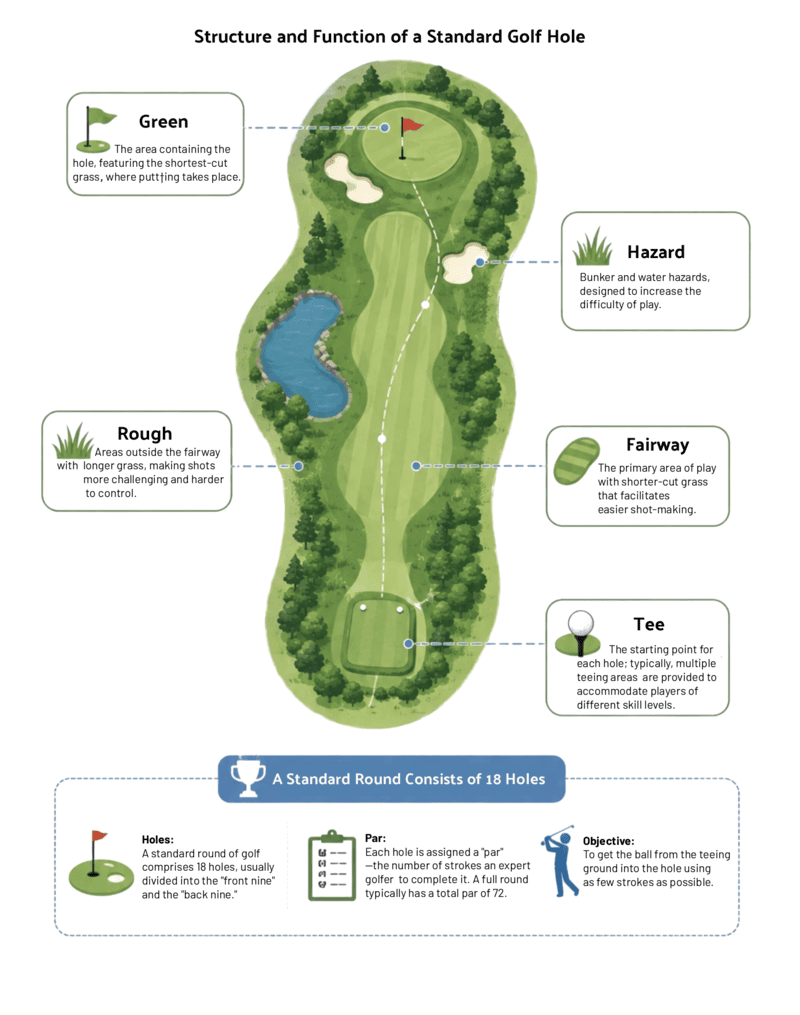
Determining whether a particular golf course area is suitable for robotic mowing primarily depends on three factors:
- Cutting quality: Whether the mower can achieve the target cutting height while maintaining a clean, consistent finish.
- Terrain adaptability and operational safety: Whether the mower can navigate slopes, complex boundaries, and obstacles safely.
- Mowing efficiency: Whether the mower’s actual coverage and productivity can meet routine turf maintenance requirements.
Grass species, growth rates, seasonal changes, and golf course operating hours also influence how an automated mowing strategy should be planned.
5 Key Areas for Robotic Mowing on Golf Courses
Robotic mowers can be used in a variety of golf course maintenance applications. Primary roughs, suitable semi-roughs, driving ranges, and landscaped lawns are good areas to prioritize. Fairways, tee boxes, green fringes, and grass surrounding hazards require closer evaluation based on equipment capabilities and site conditions.
1. Roughs and Semi-Roughs
Roughs are typically located alongside fairways and are among the first areas golf courses should consider for automated mowing. According to the reference maintenance figures, primary roughs account for approximately 20–30% of the total course area, with a typical cutting height of 30–50 mm. Semi-roughs form the transition between fairways and taller roughs, with a typical cutting height of 25–38 mm.
These areas are either extensive or require regular mowing, while their low-cut precision requirements are generally less demanding than those of fairways and putting greens. Robotic mowers can maintain consistent grass heights, reduce repetitive manual mowing, and allow maintenance crews to focus on other course management tasks.
When selecting robotic mowers for golf course roughs, prioritize coverage efficiency, cutting height, slope handling, and edge-cutting performance. For narrow semi-roughs or areas with irregular boundaries, navigation accuracy and maneuverability are also important considerations.
2. Driving Ranges and Landscape Areas
Golf driving ranges typically feature large, open grass areas that require regular mowing, making them well suited to large-area robotic mowing. Clubhouse lawns, entrance landscaping, and other out-of-play areas also tend to have less demanding cutting requirements, making them practical locations for early robotic mower deployment.
When using robotic mowers on driving ranges, golf balls should be collected before mowing, and mowing schedules should be coordinated with ball collection and operating hours. For clubhouse lawns and landscape areas, the main priorities are safe obstacle avoidance, clear operating boundaries, and pedestrian management. Scheduling mowing during quieter periods can help reduce interference with visitors.
3. Fairways
Fairways are the main playing areas of a golf course and account for approximately 20–30% of the total course area in the reference figures. Typical fairway cutting heights range from 10–13 mm, although some courses maintain their fairways at 8–12 mm. Due to their extensive coverage and frequent mowing requirements, fairways offer significant potential for automated turf maintenance using specialized robotic mowers.
However, fairways have demanding requirements for cutting height, cutting quality, and surface smoothness that standard robotic mowers may not be able to meet. When selecting robotic mowers for golf course fairways, it is important to prioritize professional low-cut capability, consistent grass height, cutting quality, and large-area mowing efficiency.
The ROBO-GOLF research project, reported by the United States Golf Association (USGA), found that robotic mowing achieved acceptable turf quality under the cool-season turfgrass conditions studied and, in some cases, delivered better results. However, the fairway cutting height used in the study was approximately 15 mm. Lower cutting heights still need to be validated through equipment testing under actual course conditions.
4. Tee Boxes and Green Fringes
The tee box is the starting point of each golf hole, while the green fringe is the transitional strip of grass surrounding the putting green. Both areas require a relatively high standard of cutting quality. Typical cutting heights are 10–15 mm for tee boxes and 12–18 mm for green fringes, with both areas generally mown two to three times per week.
Robotic mowers equipped with professional low-cut capabilities, precise navigation, and flexible maneuverability can help manage routine mowing in these areas. However, because some of these areas are small and have complex boundaries, on-site testing is recommended to verify cutting quality, edge-cutting performance, and actual mowing efficiency before full deployment.
5. Grass Around Bunkers and Water Hazards
Grass surrounding bunkers and water hazards often features irregular boundaries, changing slopes, and narrow strips of turf. Maintaining these areas with traditional equipment can require considerable manual effort. Robotic mowers with precise positioning, effective edge-cutting capabilities, and suitable terrain adaptability can handle some of these maintenance tasks within safe operating limits.
The suitability of these areas largely depends on the mower’s boundary control capabilities and site-specific safety conditions. Before deployment, appropriate no-go zones should be established, and safe operating distances should be maintained according to equipment requirements and site-specific risks. This ensures that robotic mowers remain within safe, designated grass areas.
Limitations of Robotic Mowers on Golf Courses
Although robotic mowers can handle routine maintenance across many areas of a golf course, they cannot completely replace traditional golf course mowing equipment.
Putting greens are one of the most challenging areas for standard robotic mowers. They typically require an extremely low cutting height of just 3–6 mm and daily mowing during the growing season. They also have strict requirements for surface smoothness, cutting quality, and ball roll. Specialized greens mowers are therefore generally required, and dedicated autonomous greens mowing equipment should also undergo practical testing before deployment.
In addition, bunker interiors, bodies of water, slopes beyond the equipment’s operating limits, and grass areas without reliable safety boundaries are unsuitable for routine robotic mowing. Waterlogged turf, excessively soft ground, or grass areas containing debris should only be mown once safe operating conditions have been restored. Secondary roughs and naturalized areas that do not require regular mowing generally do not need routine automated mowing.
Golf course managers should therefore define robotic mowing zones according to the maintenance requirements, terrain conditions, and equipment capabilities of each area, while retaining traditional maintenance methods where necessary.
Where to Start with Robotic Mowing on Golf Courses
For golf courses introducing robotic mowers for the first time, it is advisable to start with areas that have clearly defined maintenance requirements, relatively simple terrain, and well-defined operating boundaries rather than attempting to automate the entire course at once. The following four steps can help establish a more efficient and reliable robotic mowing strategy.
Step 1: Assess Golf Course Mowing Requirements
Record the actual mowing area, target cutting height, mowing frequency, terrain conditions, obstacles, and available operating hours for each zone. Keep in mind that the total land area of a golf course is not the same as its actual mowing area. Accurately assessing the area that requires mowing is essential for equipment selection and fleet planning.
Step 2: Select a Suitable Pilot Area
Prioritize areas with relatively manageable maintenance requirements, such as primary roughs, clearly defined semi-roughs, driving ranges, or clubhouse lawns. If professional low-cut robotic mowers are already available, a selected section of a fairway can also be used as a pilot area to evaluate actual cutting performance.
Step 3: Evaluate Robotic Mowing Performance
During the pilot phase, monitor mowing efficiency, grass height consistency, missed areas, turf damage, manual touch-up time, and equipment reliability. It is also important to evaluate whether robotic mowing interferes with normal golf course operations. Actual coverage capacity should be determined through on-site testing rather than relying solely on the manufacturer’s rated coverage area.
Step 4: Gradually Expand Automated Mowing Coverage
Use the pilot results to optimize mowing routes, operating schedules, zone boundaries, and charging station locations. Automated mowing can then be gradually expanded to fairways, tee boxes, and suitable edge areas. USGA golf course case studies indicate that turning requirements, obstacles, and slopes can all affect actual mowing coverage, making it important to adapt deployment strategies to individual course conditions.
A phased deployment approach allows golf course managers to reduce initial implementation risks while gradually increasing the level of automation without compromising turf quality or operational safety.
How to Choose the Right Robotic Mower for Your Golf Course
When choosing robotic mowers for golf courses, equipment price and maximum coverage area should not be the only considerations. Cutting quality, terrain adaptability, navigation accuracy, operational safety, and long-term operating costs are equally important. The following six factors can help golf course managers select equipment that meets their actual maintenance needs.
1. Cutting Height and Cutting System
Different golf course areas have different requirements for cutting height and cutting quality. Choose a robotic mower whose cutting height range and cutting system meet the maintenance standards of the intended mowing area. For low-cut areas such as fairways and tee boxes, consider not only the minimum cutting height but also the actual cutting quality and grass height consistency demonstrated through on-site testing.
2. Mowing Efficiency and Coverage Area
Golf courses typically feature extensive grass areas, making actual mowing coverage particularly important. When evaluating commercial robotic mowers, consider the mowing area, required mowing frequency, available daily operating hours, charging time, and travel time between mowing zones rather than relying solely on the maximum rated coverage area.
3. Slope Handling and Terrain Adaptability
Golf courses may include hills, slopes, narrow grass strips, and complex terrain. Robotic mowers should offer slope-handling capabilities, accessibility, and maneuverability appropriate for the actual course conditions. For slippery turf or areas with significant changes in slope, operational stability and safety should receive particular attention.
4. Precision Navigation and Multi-Zone Management
Robotic mowers equipped with RTK (Real-Time Kinematic) positioning, vision-based navigation, or other reliable navigation technologies can support accurate zone mapping and route planning. For golf courses with varying mowing standards, multi-zone management, independent cutting height settings, and safe travel between zones can help improve automated maintenance efficiency. Navigation reliability under tree cover and around complex boundaries should also be verified.
5. Obstacle Avoidance and Operational Safety
Golf course operating environments involve golfers, maintenance staff, golf balls, and various obstacles. When selecting a robotic mower, look for features such as intelligent obstacle avoidance, emergency stop functions, no-go zone settings, and remote monitoring. The equipment’s ability to detect small obstacles should also be verified. Appropriate mowing schedules can help minimize disruptions to normal golf course operations.
6. Charging, Maintenance, and After-Sales Support
For commercial robotic mowers operating frequently over extended periods, automatic charging, routine maintenance, blade replacement, spare parts availability, and after-sales technical support are equally important. Golf course managers should consider equipment purchase costs, ongoing maintenance expenses, and manual touch-up costs when evaluating the long-term value of robotic mowing.
Conclusión
Robotic mowers offer golf courses a more flexible and efficient approach to turf maintenance. Roughs, semi-roughs, driving ranges, and landscaped lawns are suitable starting points for automated mowing, while fairways, tee boxes, and edge areas require careful evaluation based on cutting standards, terrain conditions, and equipment capabilities.
Choosing the right robotic mower and gradually expanding coverage from suitable areas can help reduce repetitive manual work, maintain consistent turf quality, and improve overall golf course maintenance efficiency.
If you are considering introducing automated mowing equipment to your golf course, Altverse can help. Based on your course size, terrain conditions, and turf maintenance requirements, we can help you evaluate suitable mowing areas, select the right equipment configuration, and develop a robotic mowing solution tailored to your facility.
Contact Altverse today to get a customized robotic mowing solution for your golf course.
FAQs About Robotic Mowers for Golf Courses
¿Son las mismas las mejores zonas para el corte con robot en los distintos tipos de campos de golf?
No necesariamente. Los campos de golf de diseño abierto suelen presentar zonas de césped más continuas con límites claramente definidos, mientras que los campos boscosos requieren tener más en cuenta la cobertura arbórea y los obstáculos. Los campos de golf de montaña exigen mayores capacidades de manejo de pendientes y estabilidad operativa. Incluso dentro del mismo tipo de zona, como una calle o un rough, la idoneidad de un cortacésped robótico depende del diseño del campo, el terreno y las capacidades del equipo.
¿Las distintas zonas de un campo de golf requieren diferentes tipos de cortacéspedes robóticos?
Not necessarily. If a robotic mower’s cutting height range, cutting quality, and terrain adaptability meet the maintenance requirements of multiple areas, it can be used across those zones. However, roughs can generally be maintained using rotary robotic mowers, while fairways with more demanding low-cut requirements may require specialized low-cut robotic mowers or autonomous reel mowers. Combining different types of equipment can help improve overall golf course maintenance efficiency.
¿Qué zonas de los campos de golf son adecuadas para el corte robótico nocturno?
Las calles, los roughs y los céspedes ajardinados con límites claramente definidos y un terreno relativamente sencillo pueden ser adecuados para el corte robótico nocturno, lo que ayuda a minimizar las molestias para los golfistas y las operaciones del campo. Sin embargo, el equipo debe contar con un sistema de navegación nocturna fiable y capacidades de funcionamiento seguras. También deben tenerse en cuenta el rocío, la humedad del césped y la actividad nocturna de la fauna silvestre, y debe evitarse el corte en aquellas zonas en las que estas condiciones supongan un riesgo para la seguridad.
¿Qué zonas de un campo de golf pueden mantener de forma más eficaz los cortacéspedes robóticos?
Las zonas de césped amplias y continuas, con relativamente pocos obstáculos y formas regulares, suelen ofrecer la mayor eficiencia en el corte con robot. Los roughs abiertos y los campos de prácticas son buenos ejemplos de ello. Por el contrario, las zonas de césped del mismo tamaño que contengan numerosos búnkers, árboles o límites irregulares pueden presentar una menor eficiencia real de corte debido a los frecuentes giros, la necesidad de esquivar obstáculos y los ajustes de ruta.
¿Deberían organizarse las zonas de corte con robot según los hoyos de golf o según el tipo de césped?
Si los roughs o las calles de varios hoyos comparten las mismas normas de mantenimiento y cuentan con vías de conexión seguras, las zonas de siega pueden organizarse por tipo de césped. Si los hoyos están muy separados entre sí, presentan un terreno complejo o tienen horarios de funcionamiento diferentes, puede resultar más práctico organizar las zonas de siega por hoyo. Una estrategia de zonificación eficaz puede reducir los desplazamientos innecesarios y los ajustes de altura de corte, al tiempo que mejora la utilización de la maquinaria.
Convierta la visión de su robot cortacésped en realidad
A medida OEM/ODM fabricación - PCBA, y logística de un solo socio.
- Rapidez desde el diseño hasta la entrega
- Marcas de todo el mundo confían en nosotros
- Revisión gratuita de DFM antes de comprometerse
- Ingeniero especializado en 24 horas

Especialista en robótica en Altverse, con más de 8 años de experiencia en cortacéspedes robóticos, abastecimiento de marca blanca, proyectos OEM/ODM y automatización inteligente para exteriores. Ayuda a los compradores internacionales a evaluar a los proveedores, comparar opciones de personalización y comprender los procesos de control de calidad, las certificaciones y la asistencia posventa.