
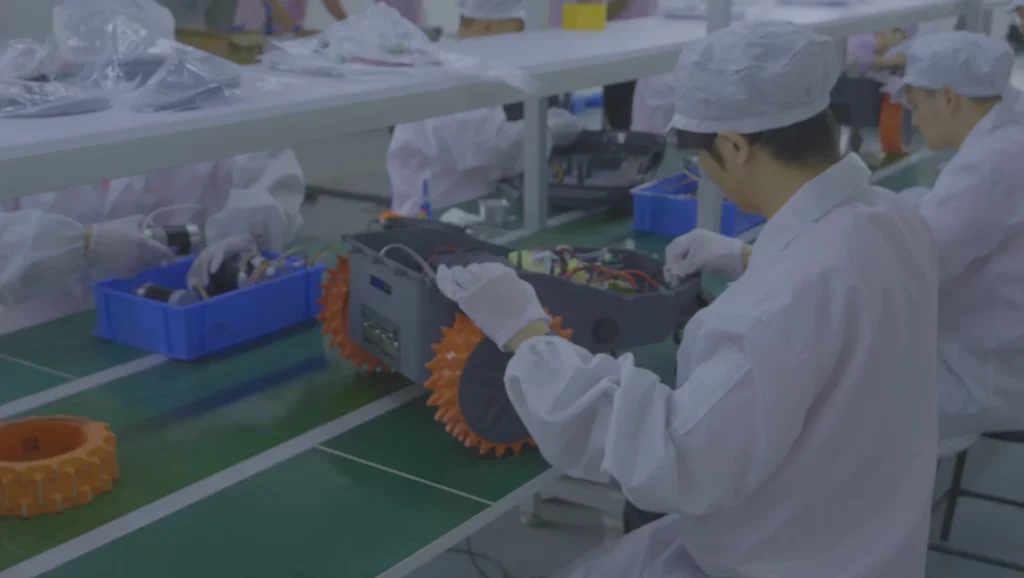








With the continued growth in consumer demand for smart homes and automated garden management, robotic lawnmowers are becoming one of the fastest-growing segments within the outdoor power equipment (OPE) industry.
For traditional OPE brands, this represents not only a new product category but also a strategic opportunity to transition from being manufacturers of mechanical equipment to brands of smart devices.
However, entering the robotic lawnmower market is not simply a matter of launching a new product. Factors such as navigation technology, software systems, product positioning, channel development and after-sales service will all directly influence the success or failure of the venture.
So, how should traditional OPE brands seize this market opportunity?
This article will systematically analyse the key pathways for OPE brands to enter the robotic lawnmower market, covering five aspects: market assessment, product positioning, development models, go-to-market strategies and long-term competitive advantages.

Why are more and more OPE brands entering the robotic lawnmower market?
Over the past few decades, competition within the OPE industry has centred primarily on petrol-powered lawnmowers, ride-on mowers and handheld gardening equipment. However, with rising labour costs, stricter environmental regulations and growing consumer demand for smart technology, growth in traditional products is slowing.
At the same time, robotic lawnmowers are rapidly gaining traction in both domestic and commercial lawn markets, thanks to their advantages of autonomous operation, low noise levels, minimal maintenance and energy efficiency.
Compared to traditional lawnmowers, robotic lawnmowers offer the following benefits:
- No manual operation required; mows autonomously
- Electric design, better aligned with environmental trends
- Intelligent navigation, improving lawn maintenance efficiency
- Support for remote control and automatic scheduling
- Reduced long-term labour maintenance costs
For OPE brands with established distribution channels, brand influence and after-sales networks, entering the robotic lawnmower market presents a natural advantage.
The key question is not ‘whether to enter’, but ‘how to enter quickly and with low risk’.
Step 1: Assess whether the robotic lawnmower market aligns with your brand strategy
Before committing funds and resources, OPE brands must first answer a key question: do robotic lawnmowers fit with your long-term business strategy?
Robotic lawnmowers are not merely an upgrade on traditional mowing equipment; they represent a new direction for the OPE industry as it transitions towards smart technology, electrification and service-oriented models.
For companies that already possess brand influence, distribution channels and after-sales service capabilities, entering the robotic lawnmower market typically offers greater advantages than creating a new brand from scratch.
Which OPE companies are best suited to enter the robotic lawnmower market?
Not all companies need to develop robotic products in-house, but the following types of businesses typically find it easier to succeed:
- Traditional lawnmower and ride-on mower brands
- Manufacturers of gardening equipment
- Dealers and channel brands for outdoor power equipment
- Commercial landscaping service providers
- Smart home and garden equipment brands
If your company already possesses established sales channels, a stable customer base and a comprehensive after-sales service system, the time investment and market risks associated with entering the robotic lawnmower market will be significantly reduced.
How do you identify your target market and core user base?
The robotic lawnmower market is not a monolithic entity; different application scenarios correspond to distinct product requirements, sales models and profit structures.
Before formulating a product strategy, it is essential to first identify who your target customers are and what values they prioritise most.
Residential Garden Market
Primarily targeting users with small to medium-sized gardens, with a greater focus on product price, ease of use and smart functionality.
High-end Residential Market
Users place greater emphasis on brand image, product design and the ability to integrate with smart home systems.
Commercial Property Market
Including office parks, hotels, schools and retail complexes, with a focus on operational efficiency, remote management capabilities and long-term operating costs.
Golf Courses and Sports Facilities
Requires high-precision navigation, the ability to cover large areas, and multi-robot coordination management capabilities.
Municipal Landscaping Market
Places greater emphasis on equipment reliability, durability and the ability to operate continuously in all weather conditions.
What core capabilities should the OPE brand assess before entering the robotic lawnmower market?
Once market opportunities have been identified, it is also necessary to objectively assess whether the company’s own resources are sufficient to support the implementation of the business.
We recommend focusing on the following six capabilities:
- Brand influence and market awareness
- Sales channel coverage
- Localised after-sales service capabilities
- Product R&D and innovation capabilities
- Supply chain management capabilities
- Software operations and data service capabilities
If a company lacks accumulated expertise in robotics technology, prioritising collaboration with established robotic lawnmower OEMs or ODMs is typically a more efficient and lower-risk approach to market entry.
Step 2: Defining Product Positioning and Target Market Segments
In the robotic lawnmower market, product positioning determines the target customer base, technical approach, distribution channels and future profitability.
Many brands fail to gain a foothold in the market not because of technical shortcomings, but because their product positioning is unclear.
How should one choose between domestic and commercial robotic lawnmowers?
For most OPE brands, deciding whether to target the domestic or commercial market is one of the most critical decisions during the product planning phase.
| Comparison Dimension | Residential Robotic Lawn Mowers | Commercial Robotic Lawn Mowers |
|---|---|---|
| Market Size | Large | Rapidly growing |
| Average Selling Price (ASP) | Più basso | Più alto |
| Technical Complexity | Moderato | Più alto |
| Sales Cycle | Breve | Lungo |
| After-sales Requirements | Moderato | Alto |
| Profit Margin | Moderato | Alto |
For OPE brands entering the robotic lawnmower market for the first time, it is advisable to prioritise the domestic market and use established products to quickly validate market demand.
Brands that already possess professional distribution channels, project delivery capabilities and a service network can focus on the commercial market to secure higher profit margins.
How can one develop differentiated robotic lawnmower products?
As market competition intensifies, it will become increasingly difficult for homogeneous products to gain user acceptance.
Rather than launching ‘all-in-one’ products, it is more important to focus on specific use cases and address the pain points of particular user groups.
The following niche areas warrant particular attention:
- Robot lawnmowers for small gardens
- Robot lawnmowers for large lawns
- Robot lawnmowers designed for steep slopes
- RTK-navigated robot lawnmowers
- Boundary-free robotic lawnmowers
- Commercial lawn management robots
Defining a clear market niche not only helps establish a brand’s competitive edge but also facilitates the creation of a clear marketing message.
During the product planning phase for robotic lawnmowers, which core parameters should be prioritised?
In the product definition stage, it is recommended to prioritise the following key metrics:
- Area covered per operation
- Maximum climbing ability
- Navigation technology solution
- Battery life
- Automatic charging capability
- Water resistance rating
- Obstacle avoidance performance
- Smart app features
Among these, navigation technology is a core factor influencing user experience and product competitiveness.
Current mainstream navigation solutions include:
- Wired navigation
- Navigazione RTK
- AI visual navigation
- LiDAR navigation
- Navigazione con fusione di più sensori
From an industry trend perspective, RTK combined with AI visual fusion navigation is emerging as the mainstream technological approach for high-end robotic lawnmowers.
This solution eliminates the need for buried wire installation, offers higher positioning accuracy and greater adaptability to complex environments, delivering a more efficient and intelligent lawn maintenance experience for users.
Step 3: Choosing the Right Product Development Model
For most traditional OPE brands, the biggest challenge is not sales, but how to bring competitive products to market quickly.
There are currently three main development models: OEM, ODM and in-house R&D for robotic lawn mowers.
What are the differences between OEM, ODM and in-house R&D models?
| Modello | Initial Investment | Tempo di commercializzazione | Level of Technical Control | Differentiation Level | Il rischio |
|---|---|---|---|---|---|
| OEM | Basso | 3–6 months | Medio | Basso | Basso |
| ODM | Medio | 6–12 months | Alto | Medio | Medio |
| In-house Development | Alto | 18–36 months | Alto | Alto | Alto |
Which collaboration model is best suited to different types of OPE brands?
Start-up brands or channel brands: Prioritise OEM
For brands wishing to enter the robotic lawnmower market quickly, OEM is the option with the lowest investment costs and the fastest time-to-market.
- No need to set up an R&D team, reducing initial investment
- Shortens the time-to-market, enabling rapid market penetration
- Reduces inventory and financial pressure
- Suitable for validating market demand and channel capabilities
Growing brands: Prioritise ODM
When a brand has built up a customer base and wishes to move away from homogeneous competition, ODM can help establish a competitive edge.
- Supports customisation of appearance, functionality and software
- Enhances brand recognition and product value
- Creates an exclusive product line
- Strengthen market competitiveness
Leading brands or large manufacturers: Focus on in-house R&D
Companies with R&D capabilities and established sales networks can build long-term competitive advantages through in-house R&D.
- Control core technologies and intellectual property
- Deeply customise product features and ecosystems
- Enhance brand premium potential
- Establish long-term technological barriers
How to choose a reliable robotic lawnmower manufacturing partner?
When selecting a manufacturing partner, price is merely a reference factor; it is more important to assess the following six core capabilities. For a detailed evaluation framework, refer to this guide on what to look for in a robotic lawn mower OEM/ODM manufacturer.
1. Navigation technology capabilities
A mature navigation system determines mowing efficiency, positioning accuracy and user experience.
Focus on whether the supplier possesses:
- RTK high-precision positioning capabilities
- Visual navigation technology
- Multi-sensor fusion solutions
2. Software Development Capabilities
Software capabilities directly impact the product’s level of intelligence and potential for future upgrades.
Key areas to examine include:
- Mobile app development capabilities
- Cloud-based management systems
- OTA (Over-the-Air) remote update capabilities
3. Product Customisation Capabilities
For brand owners, customisation capabilities determine the degree of product differentiation.
Key areas to understand include whether the supplier supports:
- Customisation of exterior design
- Customisation of functional configurations
- Customisation of software interfaces and branding
4. Manufacturing and Quality Management Capabilities
Stable production and quality control capabilities are key to ensuring timely delivery and reducing after-sales costs.
Key areas to focus on:
- Automated production capabilities
- Standardised quality management systems
- Large-scale delivery capabilities
5. Certification and Compliance Experience
Suppliers familiar with the regulations of the target market can effectively shorten the product time-to-market.
Common certifications include:
- CE
- FCC
- UL
- RoHS
- UN38.3
- IEC 62133
6. After-sales service capabilities
A comprehensive after-sales system can reduce operational risks and enhance end-user satisfaction.
Key considerations:
- Technical training support
- Spare parts supply capability
- Remote operation, maintenance and fault diagnosis services
An excellent manufacturing partner not only supplies products but also provides ongoing support in areas such as R&D, product iteration and market expansion, helping the brand achieve long-term growth.
Step 4: Planning your market launch strategy and channel strategy
Launching a product is just the beginning; the key to rapidly gaining a foothold in the market lies in your channel strategy, brand positioning and service system.
How should you choose the right sales channels?
Different target customers require different sales models, so you should prioritise channels that best suit your strengths.
Common channels include:
- Traditional dealer networks
- Home furnishings retail channels
- E-commerce platforms
- Specialist landscaping channels
- Commercial project partnership channels
For most OPE brands, prioritising the activation of existing channel resources is typically more efficient and cost-effective than developing entirely new channels.
How to create differentiated brand value?
When purchasing robotic lawnmowers, consumers focus not only on product performance but also on the problems the product solves and the value it delivers.
Brand communication should centre on the following core selling points:
- Intelligence
- Automation
- Energy efficiency and environmental protection
- Ease of use
- Efficient lawn management
In marketing content, avoid overloading the message with technical specifications; instead, emphasise real-life usage scenarios and user benefits.
Ad esempio:
- Do not simply emphasise that “RTK positioning accuracy is centimetre-level”
- Instead, convey that “no need to bury wires; lawn mapping can be completed in 10 minutes”
Allowing users to intuitively experience the convenience the product brings is far more persuasive than merely displaying technical specifications.
How to establish a comprehensive after-sales service system?
Robotic lawnmowers are not merely hardware products, but long-term operational solutions comprising “hardware + software + service”.
A comprehensive after-sales system directly impacts user satisfaction, repeat purchase rates and brand reputation.
Key service capabilities include:
- Installation and commissioning support
- User training
- Spare parts supply
- Online customer support
- Remote diagnostics
- OTA remote updates
- Warranty services
For commercial users and large-scale project clients, service capabilities are often more important than product price. Stable, efficient after-sales support is key to enhancing customer loyalty and establishing a long-term competitive advantage.
Step 5: Building a long-term competitive advantage, rather than simply launching a product
Competition in the robotic lawnmower market is shifting from hardware performance to software capabilities, data value and ecosystem development.
For OPE brands, launching a product is merely the first step; continuously enhancing user experience and service capabilities is the key to establishing a long-term competitive advantage.
Shifting from hardware competition to software and service competition
As navigation, sensor and battery technologies gradually mature, future differentiation will increasingly be reflected in software and service capabilities.
Key capabilities include:
- App user experience
- Cloud platform management capabilities
- Data analysis and operational capabilities
- Remote device management capabilities
- OTA continuous upgrade capabilities
Brands capable of continuously optimising the product experience and rolling out new features will find it easier to enhance user retention and brand loyalty.
Proactive planning for next-generation robotic lawnmower technology
New technologies are accelerating industry upgrades; proactive planning helps secure a first-mover advantage in the market.
Key areas of focus include:
- RTK and AI vision-fusion navigation
- Boundary-free mowing technology
- Multi-robot collaborative operation
- Intelligent obstacle avoidance
- Intelligent path planning
- Fully automated charging and scheduling
These technologies will further enhance the intelligence and operational efficiency of robotic lawnmowers.
Moving from a single product to a smart lawn management ecosystem
In the long term, robotic lawnmowers are not merely a piece of equipment, but a key entry point into the smart garden ecosystem.
Brands need to shift from ‘selling products’ to ‘providing ongoing services’, gradually building a comprehensive lawn management ecosystem.
Key strategic focus areas include:
- Integration with smart home platforms
- Cloud-based device management platforms
- Dealer management systems
- Data operations platforms
- Value-added service systems
In the future, software subscriptions, remote operation and maintenance, and data services are expected to become new growth engines, generating recurring revenue and delivering greater customer value for brands.
Key Challenges Facing the OPE Brand in Entering the Robotic Lawnmower Market and Corresponding Strategies
| Sfida | Impact | Mitigation Strategy |
|---|---|---|
| High technical barriers | Involves core technologies such as RTK, vision-based navigation, and path planning, making R&D highly complex | Cooperate with mature OEM/ODM manufacturers and leverage validated technology solutions |
| Long product development cycle | Long timeline from design to mass production, increasing the risk of missing market windows | Prioritize mature platforms for rapid productization to shorten development cycles |
| Complex certification process | Different markets (e.g., Europe and North America) have strict and varied certification standards, leading to long timelines and potential compliance risks | Plan certification requirements early and integrate compliance considerations into the design stage |
| High after-sales cost | Hardware + software + connectivity services increase long-term operational and maintenance pressure | Build a remote service system and leverage OTA updates to reduce on-site maintenance needs |
| High user education cost | Users have limited understanding of concepts such as “wire-free setup” and “automated mapping” | Strengthen scenario-based marketing and reduce adoption barriers through real-world demos and use cases |
For most OPE brands, the key lies not in developing all the technology from scratch, but in how to efficiently integrate established supply chains and technical resources to build a viable, scalable product and market system in the shortest possible time.
Conclusione
Robotic lawnmowers represent not only a new product direction for the OPE industry, but also a vital pathway for the traditional outdoor power equipment sector to upgrade towards intelligence, electrification and service-oriented models.
For OPE brands, the key to successful market entry lies in a clear roadmap:
- Identify market opportunities and brand positioning
- Define target users and product direction
- Select the appropriate development model (OEM / ODM / in-house R&D)
- Formulate a practical market entry strategy
- Build long-term competitive advantages (software + services + ecosystem)
Future competition will no longer be solely about product performance, but rather a comprehensive contest of technology, software and service capabilities.
If you are planning to enter the robotic lawnmower market, please contact Altverse to accelerate your robotic lawn mower product line launch with integrated support from product definition to mass production, thereby accelerating the intelligent transformation of your OPE business.
Domande frequenti
How long does it typically take for an OPE brand to bring a robotic lawnmower to market?
The timeframe depends on the development model and technical foundation. If a mature OEM/ODM platform is utilised, the process from product definition to mass production can usually be completed within 6–12 months; however, an in-house R&D cycle may take 18–36 months or more. For brands entering the market for the first time, it is advisable to prioritise mature solutions to shorten the time-to-market.
Is it more suitable for an OPE brand to launch its own robotic lawnmower directly, or is it more prudent to start with private labelling?
For most traditional OPE brands, the more prudent approach is to enter the market via private labelling or ODM first, before gradually upgrading to a proprietary product range. This is because robotic lawnmowers are not merely hardware products; they also involve software, navigation and ongoing maintenance capabilities. Direct in-house development carries a high level of risk, whereas OEM/ODM partnerships allow for faster validation of market feedback.
Is it necessary to establish an in-house R&D team to enter the robotic lawnmower market?
A full in-house R&D team is not necessarily required. Most brands can rely on established OEM/ODM solutions to bring products to market in the early stages. The focus should be on product definition and market operations capabilities, rather than complete in-house technical development.
How can OPE brands mitigate the risks of entering the robotic lawnmower market?
The most effective approach is to utilise a mature platform to launch products rapidly, iterating gradually through small-scale market validation (such as pilot schemes or regional markets), rather than investing heavily in in-house R&D from the outset.
What are the key stages a robotic lawnmower project typically goes through from inception to mass production?
These generally include six stages: product definition, solution selection, prototype validation, small-batch trial production, certification testing and mass production. Different models (OEM/ODM/in-house R&D) will significantly affect the time and complexity of each stage.
Trasformate la vostra visione di falciatura robotizzata in produzione
Personalizzato OEM/ODM produzione - PCBA, l'assemblaggio e la logistica da parte di un unico partner.
- Tempi rapidi dalla progettazione alla consegna
- Fiducia nei marchi di tutto il mondo
- Revisione gratuita del DFM prima di impegnarsi
- Tecnico dedicato entro 24 ore

Esperto di robotica, appassionato di esplorazione di un'ampia gamma di robot, di robot che rendono il lavoro più efficiente, di robot esplorativi, compresi i robot mobili, i robot tagliaerba.


