
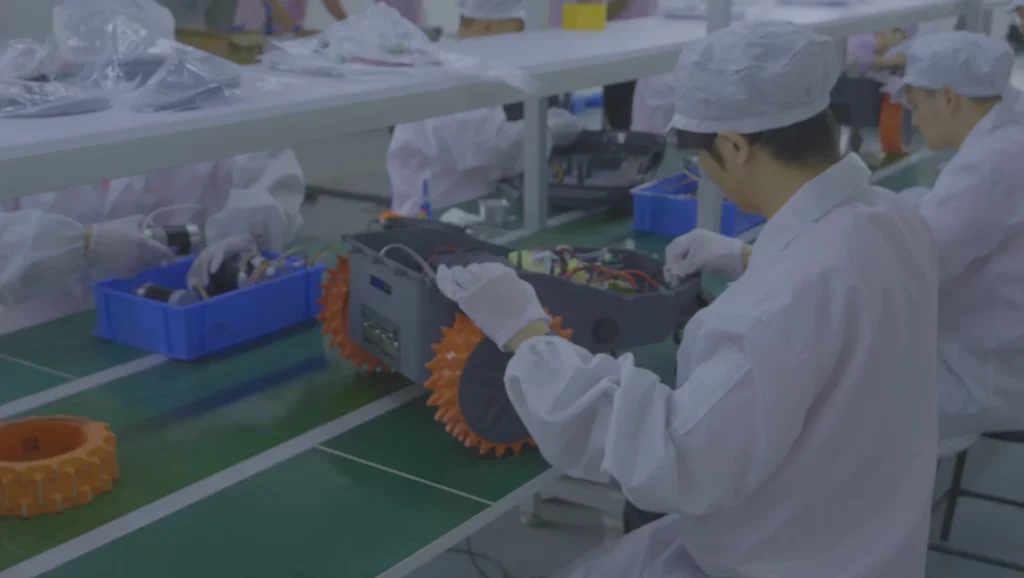








In recent years, robotic lawn mowers have revolutionized lawn maintenance, shifting from manual operation to fully automated solutions. Among various technologies, RTK (Real-Time Kinematic) and LiDAR (Light Detection and Ranging) navigation systems stand out as the most advanced options for robotic mowers. Yet many consumers feel confused when faced with these two technologies: Which one truly meets their needs? This article will thoroughly compare RTK and LiDAR robotic mowers to help you make an informed choice based on your lawn’s characteristics, budget, and usage scenarios.
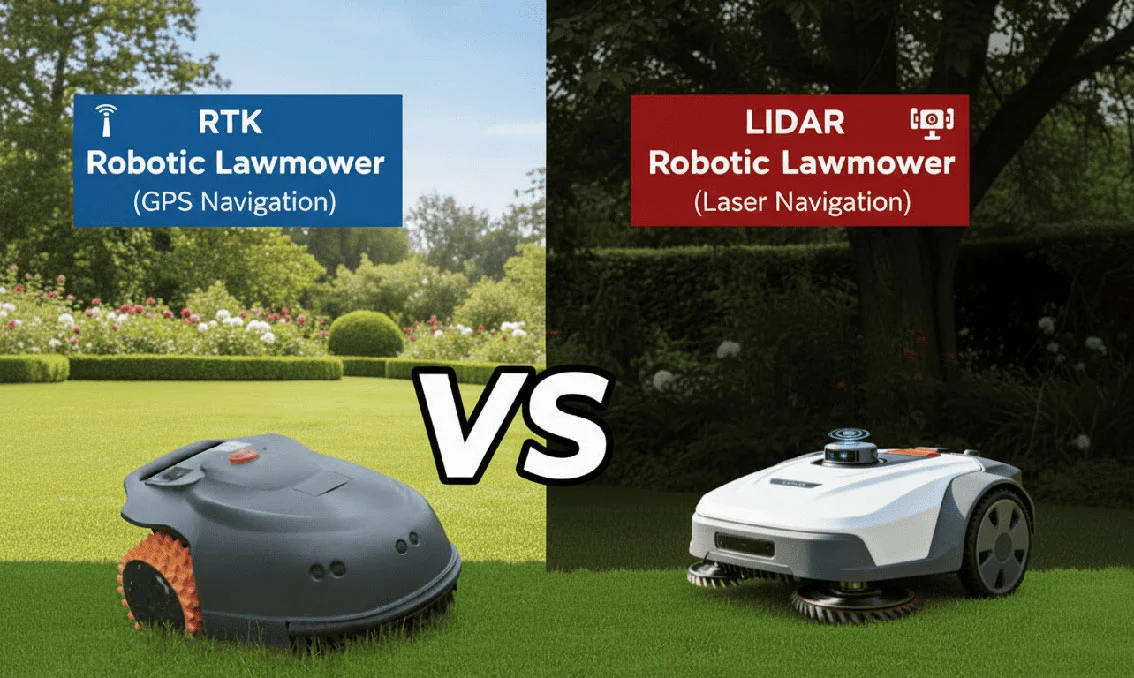
Robot Lawn Mower Introduction
Robotic lawnmowers are intelligent devices capable of autonomously trimming lawns without human intervention. They navigate using sensors, GPS, or laser technology, transitioning from traditional manual mowing to fully automated operation. In recent years, technological advancements have expanded the range of these devices from budget-friendly models to professional-grade units, suitable for lawns of varying sizes and terrains. When selecting a model, consider factors such as lawn size, terrain complexity, and budget.
What is RTK?
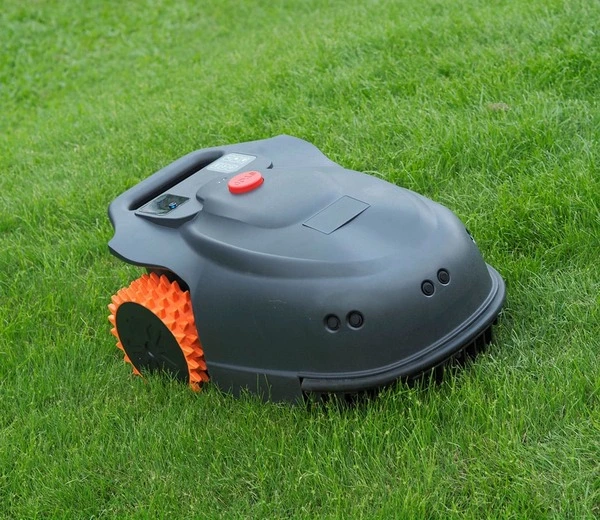
RTK (Real-Time Kinematic) is a satellite-based positioning technology that uses base stations to transmit correction signals, enhancing standard GPS accuracy from meters to centimeters. This enables RTK mowers to achieve high-precision navigation without relying on physical boundary wires. RTK robotic mowers are particularly suited for large lawns, such as yards over 1 acre or golf courses, and can adapt to slopes and uneven terrain.
Advantages of RTK Technology
1. High Precision and Efficient Coverage
RTK delivers centimeter-level positioning accuracy, ensuring uniform mowing paths and minimizing overlapping or missed areas—particularly efficient for large-scale lawn maintenance.
2. Simplified Installation Process
RTK-equipped robotic mowers reduce reliance on complex physical boundary wires, eliminating tedious wiring installation and streamlining setup.
3. Robust Terrain Adaptability
Even on slopes or uneven surfaces, RTK mowers maintain excellent navigation accuracy, making them suitable for all-terrain operation.
Limitations of RTK Technology
1. Signal Dependency
RTK relies on stable satellite signals. Obstacles like tall trees or buildings may interfere with signal reception, affecting positioning accuracy.
2. Cost Considerations
Compared to entry-level robotic mowers, RTK models typically target the mid-to-high-end market, reflecting their technological sophistication.
What is LiDAR ?
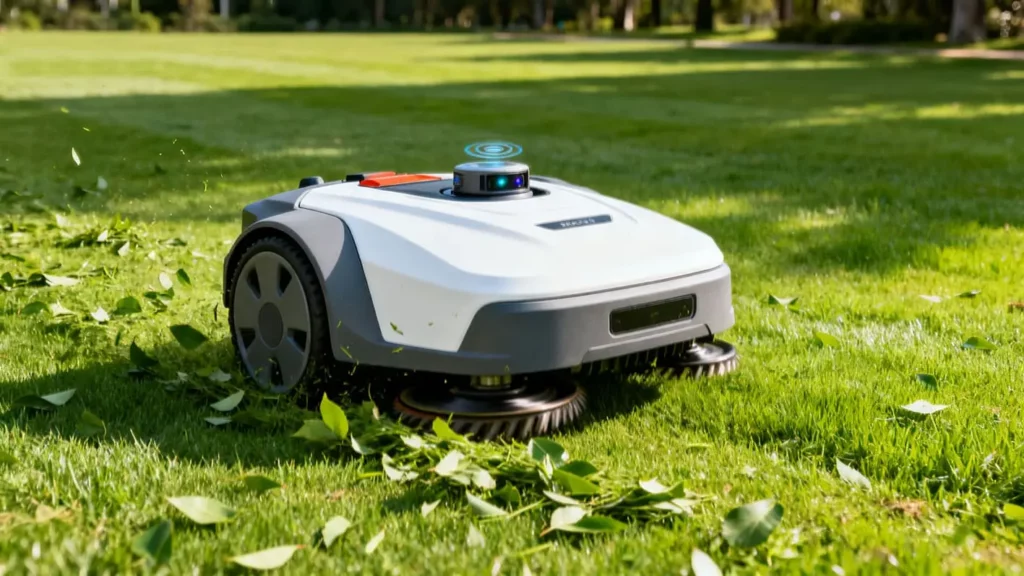
LiDAR (Light Detection and Ranging) uses laser beams to measure distances and create real-time 3D maps, enabling mowers to intelligently avoid obstacles like trees, flower beds, or garden furniture. This technology operates independently of GPS signals, delivering exceptional performance in complex or cluttered environments. LiDAR mowers are generally better suited for small to medium-sized lawns, particularly irregularly shaped yards.
Advantages of LiDAR Technology
1. Superior Obstacle Avoidance
LiDAR excels at detecting and navigating around obstacles, effectively identifying objects like trees, flower beds, and toys within yards. This makes it ideal for complex environments.
2. No External Signal Dependency
Since it doesn’t rely on GPS signals, LiDAR mowers maintain stable operation even in areas with poor satellite reception, such as near tall buildings or under dense tree cover.
3. Precise Local Navigation
For small yards with complex layouts, LiDAR’s accurate mapping capability ensures every nook and cranny is precisely trimmed.
Limitations of LiDAR Technology
1. Higher Cost
LiDAR systems incorporate complex sensors and processors, typically found in high-end models with relatively premium pricing.
2. Environmental Sensitivity
Performance may be impacted under adverse weather conditions like rain, fog, or dust, or when encountering highly reflective surfaces, potentially reducing mapping accuracy.
Comparison of RTK and LiDAR Mowers
|
Comparison Dimensions |
RTK Mowers |
LiDAR Mowers |
|
Accuracy |
Centimeter-level precision, ideal for large open lawns |
High-precision obstacle avoidance, suitable for complex environments |
|
Installation difficulty |
Requires base station setup, but reduces reliance on boundary lines. |
Typically requires no boundary lines and is easy to install. |
|
Suitable terrain |
Large lawns, hillsides, golf courses |
Small backyards, areas with dense obstacles, irregular terrain |
|
Lawn size |
Ideal for large lawns (over 1 acre) and golf courses |
More suitable for small to medium-sized lawns (less than 1 acre) |
|
Cost |
Mid-to-high price point, reflecting advanced technology and efficient coverage |
Premium pricing due to the complexity of sensors and processing units |
|
Obstacle avoidance capability |
Relying on pre-set maps, obstacle avoidance capability is moderate. |
Real-time dynamic obstacle avoidance, excels in densely obstructed environments |
|
Environmental Adaptability |
Relies on satellite signals, which may be affected by trees or buildings. |
May be affected by rain, dust, or reflective surfaces |
|
Maintenance Requirements |
Lower, primarily inspecting base stations and blades |
Higher, requiring cleaning of the sensor and laser components |
As shown in the table, RTK robotic mowers excel in coverage efficiency and precision, making them particularly suitable for large lawns. Meanwhile, LiDAR robotic mowers demonstrate superior performance in obstacle avoidance and handling complex environments.
How to Choose the Right Robotic Lawn Mower for You
When selecting between RTK and LiDAR robotic mowers, multiple factors must be considered. Below is a detailed guide to help you make your decision.
Based on Lawn Size and Type
1. Large Lawns (Over 1 Acre)
RTK mowers are the preferred choice. Their centimeter-level accuracy ensures efficient coverage, reducing redundant mowing and saving time and energy. For example, on golf courses or commercial lawns, RTK technology delivers uniform trimming results.
2. Medium-Sized or Complex Lawns
If your yard features flower beds, trees, or furniture, a LiDAR mower may be more suitable. Its real-time obstacle avoidance dynamically adjusts paths to prevent collisions.
3. Uneven Terrain
Both technologies handle slopes, but RTK offers more stable all-terrain performance, while LiDAR is more agile with dynamic obstacles.
Budget Considerations
1. Economical Choice
If budget is tight, consider base models without RTK or LiDAR, though they may lack precision and smart features. RTK mowers fall into the mid-to-high-end range, but their efficiency reduces long-term maintenance costs.
2. Premium Investment
LiDAR mowers are typically pricier, catering to users prioritizing top-tier obstacle avoidance. RTK models offer a more balanced cost-performance ratio, especially for large lawns.
Smart Features and Connectivity
Modern robotic mowers often include smart features like app control, auto-charging, and real-time monitoring. RTK mowers often integrate advanced mapping capabilities to optimize cutting paths, while LiDAR models excel at real-time route adjustments. For remote control and scheduling, both technologies offer comparable features, though RTK slightly outperforms in coverage efficiency.
Safety and Maintenance
1. Safety
Both robotic mower types incorporate safety features like auto-stop and protective guards. RTK models rely on stable signals and may require additional checks during inclement weather.
2. Maintenance
Regular blade and battery checks are essential. RTK mowers may reduce blade wear due to their precision, while LiDAR models require more frequent sensor cleaning in dusty environments.
Overall, both RTK and LiDAR robotic mowers have distinct advantages. For large, open lawns where efficient, precise coverage is prioritized, an RTK robotic mower is an ideal choice. Its centimeter-level precision and all-terrain capability make it excel in commercial and large residential lawns. Conversely, for smaller, cluttered, or obstacle-filled yards, LiDAR robotic mowers offer greater flexibility through superior obstacle avoidance. When selecting a robotic mower, evaluate your specific needs: lawn size, terrain complexity, budget, and smart feature preferences.
FAQ
Which is more accurate: RTK or LiDAR robotic mowers?
RTK delivers centimeter-level precision in open areas, ideal for uniform coverage of large lawns; LiDAR achieves high accuracy in complex environments through real-time mapping, though it prioritizes obstacle avoidance. Overall, RTK slightly outperforms LiDAR in path accuracy.
Which should I choose if my lawn has both large open areas and obstacles?
In this scenario, an RTK mower may be more versatile as it efficiently covers large areas while handling obstacles via additional sensors. However, if obstacles are extremely dense, a LiDAR mower’s real-time obstacle avoidance may prove more reliable.
Which mower is better suited for sloped terrain?
RTK mowers perform stably across all terrains, including slopes, thanks to their high-precision navigation. LiDAR models can also handle slopes, but their focus may be more on obstacle avoidance than overall path optimization. For steep inclines, RTK is generally the safer choice.
How do RTK and LiDAR robotic mowers compare in battery life?
Both feature efficient battery systems, but RTK mowers may consume less power on large lawns due to optimized path planning, resulting in longer runtime.
Can I upgrade my existing robotic mower to RTK or LiDAR technology?
Typically not, as these technologies are integrated into the hardware and software systems. Purchasing new equipment is recommended to ensure compatibility and performance.
Which technology is more durable in the long term?
RTK systems are generally more stable due to their reliance on mature satellite infrastructure; LiDAR sensors may experience wear over time.
Turn Your Robotic Mower Vision Into Production
Custom OEM/ODM manufacturing — PCBA, assembly, and logistics from one partner.
- Fast turnaround from design to delivery
- Trusted by brands across the globe
- Free DFM review before you commit
- Dedicated engineer within 24 hours

Expert in robotics, passionate about exploring a wide range of robots, robots that make work more efficient, exploring robots, including mobile robots, lawnmower robots.


