
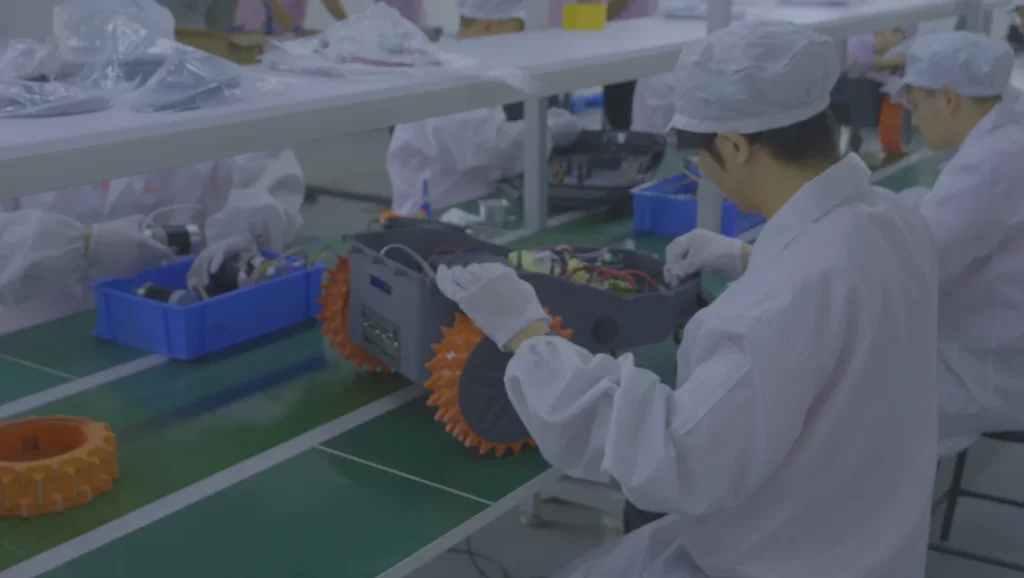




If your company plans to sell robot lawn mowers under its own brand, the real difference between White Label and Private Label is not whether your logo appears on the machine. It is how far you want to customize a proven product platform—and how much MOQ, cost, lead time, and project complexity you are prepared to take on.
For companies that still need to validate demand, sales channels, and order volume, White Label is usually the lower-risk starting point. If you already have stable sales and want stronger differentiation through color, packaging, an app, accessories, or product configuration, Private Label can make more sense.
This guide compares White Label vs Private Label Robot Lawn Mowers across customization depth, MOQ, project cost, time to market, brand differentiation, and long-term version management.

What Is the Difference Between White Label and Private Label Robot Lawn Mowers?
The main difference is the level of customization and product control a brand takes over a proven robot lawn mower platform.
White Label usually keeps the manufacturer’s validated configuration largely unchanged, making it easier to control MOQ, reduce project variables, and launch faster. Private Label adds more brand-specific elements—such as housing color, packaging, app branding, accessories, or market-specific configurations—to create a more differentiated product.
There is one important caveat: White Label, Private Label, OEM, and ODM are commercial terms, not perfectly standardized engineering definitions. Different robot lawn mower manufacturers may use them differently. When sourcing, focus on the actual project scope: what stays standard, and what will be changed specifically for your brand.
What Is a White Label Robot Lawn Mower?
A White Label Robot Lawn Mower usually uses an existing, production-ready platform. The core structure, navigation system, PCBA, firmware baseline, and major components remain largely unchanged.
Branding is typically limited to items such as the logo, nameplate, labels, and light packaging or manual changes. The main advantage is not deeper customization—it is fewer project variables. For a brand, importer, or distributor entering the robotic mower market for the first time, that makes it easier to test product-market fit before investing in a more customized version.
What Is a Private Label Robot Lawn Mower?
A Private Label Robot Lawn Mower can still be built on a mature platform, but the market-facing product becomes more specific to your brand.
Typical Private Label customization may include:
- Brand-specific housing colors
- Custom packaging and manuals
- Dedicated accessory bundles
- App logo, product name, and visual branding
- Market-specific product or feature configurations
The underlying mower platform does not necessarily need to be redesigned. The difference is that the product customers see and use feels much more like your own branded robot mower.
When Does a Project Go Beyond Private Label?
If the project starts changing the chassis structure, tooling, PCBA, key sensors, navigation architecture, or requires substantial firmware or software development, it has usually moved beyond normal Private Label scope.
At that point, it is better to evaluate the project as robot lawn mower OEM/ODM customization, including engineering development, prototype validation, tooling, intellectual property, and mass-production planning.
White Label vs Private Label Robot Lawn Mowers: Quick Comparison
| Factor | White Label | Private Label |
|---|---|---|
| Product platform | Proven standard model | Proven platform with brand-specific configuration |
| Branding | Logo, labels, basic packaging | Color, packaging, app, accessories, configuration |
| Customization depth | Low | Moderate, depending on scope |
| MOQ | Usually lower | Usually higher |
| Upfront investment | Lower | Higher |
| Time to market | Faster | More approvals and validation |
| Product differentiation | Limited | Stronger |
| Version management | Simpler | More complex |
| Best suited for | Market validation and first commercial orders | Established brands and channels that need differentiation |
30-second answer: If your priority is to enter the robotic lawn mower market with lower risk, White Label is usually the better fit. If your market and channel are already proven and you need stronger brand recognition, Private Label is more likely to justify the extra investment.
Private Label is not automatically “better” than White Label. The better model is the one whose customization level matches your sales volume, channel maturity, and ability to manage dedicated product versions.
Key Difference 1: Customization Depth and Product Control
White Label is built around one principle: change as little as possible on a robot lawn mower platform that has already been validated.
For a first-time buyer, that means fewer variables in sampling, production, and after-sales support. Your team can focus on the questions that matter most: Does the mower work well in the target lawn environment? Can dealers demonstrate and install it easily? Is the app experience acceptable? Can your support team handle common user issues?
Private Label gives the brand more control over the customer-facing product. That may include dedicated colors, packaging, accessories, app visuals, or selected feature configurations.
But each additional brand-specific version also creates another item that may need purchasing control, approval, QC, spare-parts planning, and after-sales documentation.
A practical rule: before asking “What else can we customize?”, ask whether the customer will notice the change and whether it can influence purchase decisions, user experience, or brand perception. If not, it may not be worth adding to the first order.
Key Difference 2: Private Label Usually Requires a Higher MOQ
MOQ is one of the most misunderstood parts of a White Label vs Private Label robot lawn mower project.
There is rarely just one MOQ. A project may have separate minimums for:
- Finished robot lawn mowers
- Logo or product labels
- Custom packaging and manuals
- Dedicated housing colors
- Deeper OEM/ODM development
For example, current Altverse AN500V project requirements can look like this:
| Project Item | Current Project Example | Typical Fit |
|---|---|---|
| Standard AN500V | 100 units | White Label |
| Brand label | 100 units | White Label / light Private Label |
| Custom packaging or manual | 500 sets | Private Label |
| Custom Pantone upper-shell color | 1,000 units | Private Label |
| Structure, PCBA, or deep software customization | Typically 1,000+ units per model | OEM/ODM |
These are current Altverse project examples, not universal industry standards.
The point is that as a project moves from White Label toward deeper Private Label, the limiting MOQ is often no longer the finished mower. It may be the branded packaging, plastic parts, color batch, or another dedicated material.
For example, you may want to buy only 100 robot lawn mowers for a first commercial test, while the custom packaging or color you request has a higher material MOQ.
So instead of asking only, “What is your robot lawn mower MOQ?”, ask:
“What is the MOQ for the finished mower, logo, packaging, manual, color, app, and every other customization we are requesting?”
For a more detailed breakdown of model MOQ, customization MOQ, trial orders, and mass production, see the Robot Lawn Mower MOQ Guide.
Key Difference 3: Private Label Costs More Than the Unit-Price Difference
A common sourcing question is: “How much more does Private Label cost per mower?”
That question is too narrow. Comparing FOB prices alone does not capture the real project cost.
White Label costs are usually concentrated around product labels, basic packaging, and document changes. Private Label can add costs for:
- Dedicated materials and color sampling
- Packaging development
- App branding or software maintenance
- Brand-specific spare parts
- Inventory tied up in custom materials
A custom housing color is a good example. It may look like a simple visual change, but operationally it can require a color standard, separate material code, purchasing batch, production planning, and matching replacement parts for after-sales service.
The better question is therefore:
Can your expected annual volume absorb the fixed and semi-fixed costs created by brand-specific materials and versions?
If sales are still uncertain, taking on substantial dedicated inventory for limited visual differentiation may not be the best first move.
Key Difference 4: White Label Usually Reaches the Market Faster
A mature White Label Robot Lawn Mower already has a stable BOM, structure, firmware baseline, and production process. With fewer items to approve, it is generally easier to move into production quickly.
Private Label can add approval steps for packaging artwork, manuals, color samples, app branding, accessory bundles, and market-specific configurations.
For robot lawn mowers, timing matters because the main selling season in many European and North American markets is concentrated around spring and summer.
If the first commercial batch is mainly intended to validate a new market, launching on time may be more valuable than maximizing customization in the first order.
A practical path is to start with White Label or light Private Label, validate demand, and then add the colors, packaging, app branding, or configurations that customers actually value.
Key Difference 5: Private Label Improves Differentiation, but It Does Not Automatically Mean Exclusivity
The main commercial value of a Private Label Robot Lawn Mower is stronger brand recognition.
Customers may see your housing color, model naming, packaging, accessories, and app rather than a standard mower that looks nearly identical across multiple channels.
However, there is an important distinction:
A brand-specific version is not the same as an exclusive product platform.
Your color, packaging, or model name may be unique to your brand while the underlying robotic lawn mower platform is still supplied to other customers.
If exclusivity matters, define it clearly in the agreement:
- Is the platform, appearance, color, or a specific feature exclusive?
- Does exclusivity apply to a country, region, or sales channel?
- How long does it last?
- Is it tied to minimum annual purchase volume?
In other words, White Label and Private Label mainly differ in brand differentiation and product control. Exclusivity is a separate commercial term that should be negotiated explicitly.
Key Difference 6: Private Label Creates More Software and Version-Management Responsibility
Modern robot lawn mowers are not purely mechanical products. App connectivity, OTA updates, Wi-Fi, Bluetooth, GNSS/RTK, cloud services, batteries, chargers, and firmware can all affect long-term project management.
App and Software
Clarify what “App Branding” actually means. Replacing a logo, product name, and UI theme is very different from developing a standalone app, account system, backend, or cloud service.
You should also define who manages OTA updates, app-store publishing, and future software compatibility.
Compliance and Technical Configuration
If Private Label changes are limited to the logo, color, and packaging, the technical configuration may remain largely unchanged.
But changes to wireless modules, antennas, PCBA, batteries, chargers, or navigation hardware can require the final production configuration to be checked again against applicable testing and compliance documentation.
After-Sales and Spare Parts
The deeper the customization, the more brand-specific versions you may need to support. Dedicated housings, accessories, or software releases can require separate spare-part codes, service documents, and version tracking.
The goal of a mature Private Label project is therefore not to customize as much as possible. It is to customize what customers can value and what your organization can maintain over the long term.
Which Is Better for Your Brand: White Label or Private Label?
The answer depends on where your robot lawn mower project is today. A useful decision rule is simple:
If you are still validating the market, start closer to White Label. If the market is proven and differentiation has become the priority, move toward Private Label.
Scenario A: You Are Entering the Robot Lawn Mower Market for the First Time
Better fit: White Label Robot Lawn Mower
Your first priority should be to prove that the product can sell. Test mowing performance, navigation stability, price acceptance, dealer installation, app experience, and after-sales workload before adding unnecessary customization.
For a boundary-wire-free robot lawn mower, for example, validating RTK/GNSS or vision navigation in real yards is more important than having a custom shell color in the first batch.
Scenario B: You Already Have an Established OPE Brand and Dealer Network
Better fit: Private Label Robot Lawn Mower
If you already have a recognized OPE brand, stable dealer network, spare-parts process, and after-sales system, customization can create real value. Brand-specific color, packaging, model naming, accessories, and app branding can help the robotic mower fit naturally into your existing product line.
Scenario C: You Are a Retailer or E-commerce Brand Testing a New Category
Better fit: White Label or light Private Label
Start with a proven robot mower platform plus the branding you actually need. Focus first on sell-through, return rate, customer reviews, installation issues, and support cost. Add higher-MOQ customization after demand is proven.
Scenario D: Your Competitive Advantage Depends on Proprietary Robot Mower Technology
Better fit: OEM/ODM development
If your product requires a different cutting system, chassis, PCBA, RTK/GNSS architecture, sensor combination, obstacle-avoidance system, or core software, the project has moved beyond ordinary White Label or Private Label.
In that case, work with a capable robot lawn mower OEM/ODM manufacturer on engineering validation, tooling, intellectual property, compliance, and mass-production planning.
Quick Decision Table
| Your Current Situation | Better Fit | Why |
|---|---|---|
| First market entry / unknown sales volume | White Label | Lower MOQ, inventory exposure, and project complexity |
| Established OPE brand and stable channel | Private Label | Brand differentiation can be amplified through an existing channel |
| Retail or e-commerce category test | White Label / light Private Label | Validate sell-through before adding high-MOQ customization |
| Proprietary structure, hardware, navigation, or software required | OEM/ODM | The project is beyond normal Private Label scope |
In simple terms: White Label is better for proving that a robot lawn mower can sell. Private Label is better for answering why customers should choose your brand once the market has already been validated.
Before Choosing White Label or Private Label, Confirm These 5 Things With the Manufacturer
Do not ask only, “Can you customize it?” Before selecting a White Label or Private Label robot mower program, clarify the customization scope, MOQ, timeline, and long-term responsibilities.
1. What Can Actually Be Customized?
Confirm the scope for the logo, housing color, packaging, manuals, app, product configuration, and hardware. If changes involve the PCBA, RTK/GNSS, sensors, or core software, the project may already be moving into deeper OEM/ODM development.
2. What Is the MOQ for the Mower and Each Custom Item?
Ask separately about the finished mower, packaging, manuals, color, labels, and other dedicated materials. Also confirm who pays for and stores any branded materials left over after the first production run.
3. Which Changes Affect Lead Time, Testing, or Compliance?
Logo and packaging changes are very different from modifications to wireless modules, antennas, PCBA, batteries, chargers, or navigation hardware. Ask the manufacturer to separate cosmetic branding changes from technical configuration changes.
4. What Does App Customization Include?
“App Branding” may mean a simple logo and UI change—or it may involve a standalone app, OTA, cloud services, account management, and long-term software maintenance. Define the scope before the project starts.
5. How Are Brand-Specific Assets and Exclusivity Defined?
If the project includes dedicated colors, tooling, app assets, functions, or regional exclusivity, define the ownership, territory, duration, and volume conditions in the agreement.
A practical test: a capable robot lawn mower manufacturer should be able to tell you what can change, what MOQ applies, how each change affects the project timeline, and who owns ongoing version-management responsibilities.
If your next question is how to evaluate the supplier itself, see our guide on how to choose a reliable White Label robot lawn mower supplier.
Final Takeaway
The key difference between White Label vs Private Label Robot Lawn Mowers is not simply “how much can be customized.” It is which level of customization makes sense for your current business stage.
If you are still validating demand, sales channels, and order volume, White Label is usually easier to control in terms of MOQ, investment, and project complexity.
If the market is proven and stable sales can support dedicated colors, packaging, app branding, and version management, Private Label can be a stronger long-term brand strategy.
The right choice is not the option with the most customization. It is the option whose customization depth matches your sales volume, brand maturity, and operational capacity.
Planning a Robot Lawn Mower Project?
If you are evaluating White Label, Private Label, or OEM/ODM cooperation, send Altverse your target market, first-order quantity, estimated annual volume, customization requirements, and target launch date.
We can help you determine the most practical cooperation model, relevant MOQ, customization scope, and project path for your robotic lawn mower program.
Talk to Altverse about your robot lawn mower project →
FAQ
Can a White Label Robot Lawn Mower Be Upgraded to Private Label Later?
Yes. Many brands validate the market with a White Label product first, then add custom color, packaging, app branding, or product configuration as sales grow. Confirm early that those upgrades can remain on the same mower platform.
Does a Private Label Robot Lawn Mower Always Require New Tooling?
No. Logo, color, packaging, manuals, and app branding can often use the existing tooling. New molds are more likely when the housing structure, dimensions, or mechanical design changes.
Should You Test Robot Lawn Mower Samples Before a Bulk Order?
Yes. Sample testing should focus on mowing performance, navigation, obstacle avoidance, charging, app experience, and real-yard suitability before you commit to Private Label mass production.
Who Owns the Private Label Robot Mower App and User Data?
It depends on the project agreement. Clarify ownership and control of app-store accounts, user data, cloud services, backend systems, and OTA permissions before development begins.
Who Handles Warranty, Spare Parts, and Software Updates for a Private Label Robot Lawn Mower?
This should be defined in the supply agreement. Confirm the warranty process, spare-parts availability, repair support, and whether the brand or manufacturer is responsible for app and firmware updates.
Can You Change Robot Lawn Mower Manufacturers Later?
Yes, but the deeper the customization, the harder the transition can be. If your product depends on supplier-specific tooling, PCBA, firmware, app, or cloud services, define ownership and transfer conditions for technical files and assets from the start.
Turn Your Robotic Mower Vision Into Production
Custom OEM/ODM manufacturing — PCBA, assembly, and logistics from one partner.
- Fast turnaround from design to delivery
- Trusted by brands across the globe
- Free DFM review before you commit
- Dedicated engineer within 24 hours

Robotics specialist at Altverse with 8+ years of experience in robotic lawn mowers, white-label sourcing, OEM/ODM projects, and smart outdoor automation. She helps global buyers evaluate suppliers, compare customization options, and understand quality control, certifications, and after-sales support.


