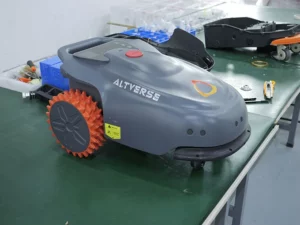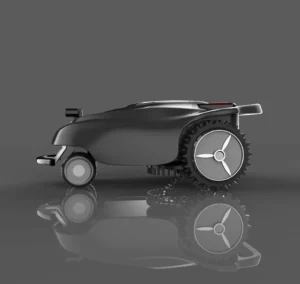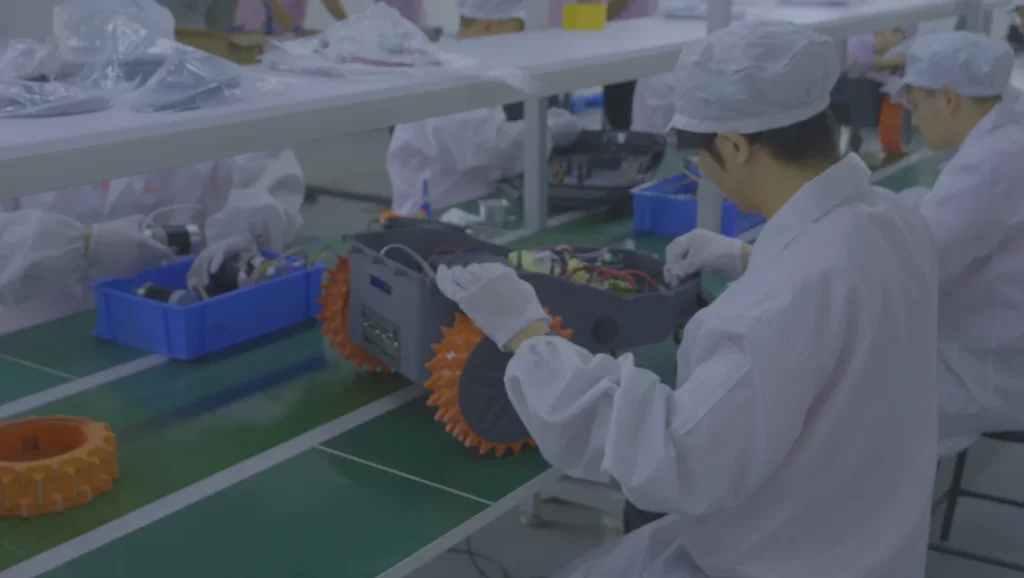


A good robot lawn mower RFQ is not about listing more specifications. It is about helping a supplier quickly understand your application, order volume, customization needs, target market, and project timing.
The goal is not simply to get the lowest price. When suppliers quote against similar requirements and commercial terms, you can compare products, configurations, and total purchasing cost on a fair basis.
So what should a B2B buyer prepare before sending an RFQ? The process is easier if you break it into three steps.

A Clear Robot Lawn Mower RFQ in 3 Steps
| STEP 1 | Define the Product Need | STEP 2 | Define the Quote Basis | STEP 3 | Standardize the Quotation |
|---|---|---|
| Project background, site conditions, performance, navigation, and smart features | Quantity, OEM/ODM, target market, delivery terms, and timeline | Quote scope, MOQ, one-time costs, checklist, and RFQ template |
The logic is simple: first help the supplier understand what product fits your project; then define the commercial conditions; finally make sure every supplier is quoting on a comparable basis.
Step 1: Define the Product Requirements in Your Robot Lawn Mower RFQ
A robotic mower cannot be selected by lawn size alone. A flat, open 1,500 m² lawn and a 1,500 m² property with trees, buildings, narrow passages, slopes, and multiple zones may require very different navigation, drive, sensing, and installation approaches.
That is why the first section of an effective robot lawn mower RFQ should describe the job and the site before it lists technical components.
1. Project Background: What Should a Robot Lawn Mower RFQ Include First?
Before recommending a product, the supplier needs to understand who you are, where the product will be sold, and what type of project you are planning. This context can affect product positioning, OEM/ODM scope, software, compliance, and pricing.
Include these basic details in your RFQ:
- Buyer type: importer, distributor, brand owner, e-commerce seller, landscaping company, or project operator.
- Target market: the country or region where the product will be sold.
- Sales channel: dealer network, e-commerce, retail, or project sales.
- Application: residential, professional/commercial, or a specific deployment scenario.
- Project model: standard product, private label, OEM/ODM, or new product development.
- Timing: when you expect samples, the first order, or market launch.
Simple RFQ example
We are a garden equipment distributor selling in Germany and Austria. We plan to add a wire-free robot mower line for residential lawns of around 1,000–2,000 m². We would like to test 3 samples first and move to a trial order after validation.
This gives a supplier far more direction than: “Please send your catalog and best price.”
2. Site Conditions: What to Share Before Robot Mower Sourcing
Lawn area is only the starting point. Slopes, obstacles, zone layout, access paths, and signal conditions can all change which product is suitable.
You do not need a professional site survey. Just describe the conditions that could affect operation:
- Typical lawn size and maximum lawn size.
- Terrain: flat, gentle slope, steep slope, soft ground, uneven ground, or mixed terrain.
- Maximum slope, including whether areas near the boundary are steeper.
- Layout: one open area or multiple areas such as front yard, backyard, and side lawn.
- Access: narrow passages, paved paths, curbs, or crossing points between zones.
- Fixed obstacles: trees, walls, flower beds, pools, fences, or other permanent objects.
- Signal environment: large trees, tall walls, or buildings that may obstruct satellite signals.
- Supporting material: ideally 3–5 site photos, a simple sketch, or a short video.
A small detail that matters: do not write only “Maximum slope: 35%.” A clearer note would be: “Maximum slope inside the mowing area: about 30%; maximum slope near the boundary: about 15%.” This helps the supplier assess traction, drive configuration, boundary behavior, and overall platform suitability.
3. Performance Requirements: How to Define a B2B Robot Lawn Mower Project
First-time buyers often start by specifying a battery size, motor power, or sensor type. Unless those numbers are based on previous testing, they can accidentally exclude a better platform.
A better approach is to describe the result you need.
| Instead of Writing | Write This | The Supplier Can Evaluate |
|---|---|---|
| Battery 10Ah | Around 2,000 m², with one full maintenance cycle within 48 hours | Battery size and charging strategy |
| Strong motor | Maximum slope around 25%, with some areas of dense grass | Drive system and wheel configuration |
| High accuracy | Wire-free setup; trees and buildings may block satellite view | Navigation architecture |
| Good obstacle avoidance | Trees, flower beds, garden objects, and low obstacles are present | Sensor and avoidance strategy |
In short: describe the operating target first, then let the supplier recommend the configuration.
4. Navigation and Smart Features: What Does a Robot Lawn Mower Supplier Need to Know?
An RFQ is not a technology exam. You do not need to decide between RTK, vision, LiDAR, or another navigation method before contacting a supplier.
Instead, explain the actual constraints:
- Is a perimeter wire acceptable, or must the product be wire-free?
- Are there tall walls, buildings, large trees, or heavy tree cover?
- Does the mower need to move between multiple mowing zones?
- Which features are genuinely required: app control, Wi-Fi, Bluetooth, 4G, OTA updates, GPS anti-theft, remote diagnostics, or fleet management?
Please recommend the most suitable navigation solution based on our site conditions, and explain the key limitations and cost difference.
If you want a clearer overview before sending your RFQ, see our guide to robot lawn mower navigation technologies.
Step 2: Define the Basis for Your Robot Lawn Mower Quotation
Once the product direction is reasonably clear, the RFQ should define the commercial basis of the quotation. Quantity, customization, target market, delivery terms, and timeline all affect price.
If these points are not standardized, two robotic lawn mower quotations may look comparable even though they cover different products and different commercial scopes.
5. Order Volume: How to State Robot Lawn Mower MOQ and Forecast
“Annual demand: 5,000 units” shows project potential, but it does not tell the factory how the project will ramp up.
A more useful RFQ separates the expected volume by stage:
| Stage | Example Quantity | Main Purpose |
|---|---|---|
| Samples / Evaluation | 2–5 units | Product and site testing |
| Trial Order / Pilot | 50–100 units | Small-batch market or deployment validation |
| First Commercial Order | 300–500 units | Market launch or channel rollout |
| Annual Forecast | 2,000–5,000 units | Pricing tiers, capacity, and material planning |
These figures are examples of how to structure an RFQ, not fixed industry MOQs. Actual quantities should reflect your project.
For a deeper breakdown of sample orders, trial orders, customization minimums, and mass production, read our robot lawn mower MOQ guide.
6. OEM/ODM Requirements: What to Include in an OEM Robot Lawn Mower RFQ
In an OEM robot lawn mower project, “Need OEM” is too vague. Customization may mean only a logo and retail box, or it may involve hardware, firmware, an app, cloud services, new tooling, or a new enclosure.
Break the request into separate work packages:
| Customization Level | Typical Scope | What to State in the RFQ |
|---|---|---|
| Branding | Logo, nameplate, box, manual | Logo files, languages, packaging requirements |
| Appearance | Color, decals, trim parts | Color reference, artwork, expected quantity |
| Hardware | Battery, wheels, sensors, cutting system, accessories | Target performance and must-have changes |
| Software | App branding, firmware, cloud/API | Functions, account model, data, update requirements |
| Deep ODM | New structure, industrial design, or platform | Target cost, tooling budget, development scope, timeline |
Also distinguish between must-have customization and optional items. This makes it much easier to confirm MOQ, NRE, tooling cost, and development time.
If you are still deciding how much customization your project needs, compare White Label vs Private Label robot lawn mowers before finalizing your OEM/ODM scope.
7. Target Market and Compliance: What Market Information Does the Supplier Need?
Robot mower versions and compliance requirements can vary by market and final product configuration. So instead of asking only, “Do you have CE?” or “Is it certified?”, start by telling the supplier where the product will be sold.
Your RFQ should state:
- The exact target country or region, rather than only “Europe” or “US market.”
- Whether the final product includes Wi-Fi, Bluetooth, 4G, or other wireless functions.
- Required charger, plug, battery, label, and manual language.
- Which existing test reports, certificates, or technical documents you want the supplier to provide.
- Which compliance items are already covered and which may require additional work, cost, or lead time.
Compliance is a high-risk area. Final requirements should be confirmed against the latest rules in the target market, the final production configuration, and the relevant testing or certification body.
For a market-by-market overview, use our robot mower certification checklist for Europe, the US, and the UK.
8. Delivery Terms and Timeline: How to Standardize Robot Mower Sourcing Quotes
Unit price alone is not enough. One supplier may quote EXW while another quotes CIF; one may include retail packaging while another assumes a standard carton. Even similar unit prices can represent very different purchasing costs.
Include the following in your RFQ:
- Delivery destination: country, port, or final city.
- Incoterm: such as EXW, FOB, CIF, or DDP, with the named place where relevant.
- Packaging: standard carton, retail packaging, pallets, or other requirements.
- Shipment scope: whether accessories and spare parts are included.
- Commercial terms: currency, payment terms, and quote validity.
- Project timeline: Sample → Test → Pilot → Mass Production → Launch / Deployment.
Why Share the Project Timeline in the First RFQ?
If the project includes app customization, new tooling, hardware changes, or additional compliance work, the real bottleneck may be engineering, testing, or documentation rather than production itself.
Sharing the timeline early helps the supplier identify unrealistic deadlines before they become project delays.
Step 3: Make Robot Lawn Mower Supplier Quotations Truly Comparable
Many buyers contact several suppliers and receive completely different quote formats. One price may cover only the mower; another includes packaging; another includes accessories; another assumes OEM branding.
The solution is not simply to contact more suppliers. Your RFQ should define what every supplier is expected to return.
9. What Should a Robot Lawn Mower Quotation Include?
Ask each supplier to provide at least the following:
- Recommended model/platform and exact configuration.
- Key performance specifications and intended application.
- Sample price and sample lead time.
- Unit pricing at different order volumes.
- Standard product MOQ.
- Separate MOQ for each customized item.
- OEM/ODM, tooling, NRE, or software development cost.
- Packaging, accessories, and spare parts included in the quote.
- Included and excluded testing, certification, and documentation.
- Mass-production lead time and when the lead-time clock starts.
- Warranty, after-sales support, and spare-parts policy.
- Payment terms, Incoterms, quote validity, assumptions, and exclusions.
Why Do Assumptions and Exclusions Matter?
A quote may say “wire-free / RTK included,” but you still need to confirm whether the reference station, installation accessories, app access, cellular/data service, and any recurring software or cloud fees are included.
The rule is simple: do not compare price numbers until you know what each price actually includes.
If you are moving from quote comparison to supplier evaluation, our bulk robotic lawn mower purchasing guide explains what to check before placing a larger B2B order.
10. 7 Common Robot Lawn Mower RFQ Mistakes
| Common Mistake | Better Approach |
|---|---|
| Only asking for the “best price” | Provide the application, quantity, target market, and delivery terms first. |
| Only providing lawn size | Add slope, layout, obstacles, access, and signal conditions. |
| Locking in the technology too early | Describe the target and constraints, then ask the supplier to explain the recommendation. |
| Only providing annual volume | Include sample, pilot, first order, and annual forecast. |
| Only writing “OEM required” | Separate logo, packaging, appearance, hardware, app, and software needs. |
| Not stating the target market | Market affects charger, wireless functions, labels, manuals, and compliance. |
| Not standardizing the quote format | Require all suppliers to return the same core commercial and technical information. |
A clearer RFQ reduces back-and-forth communication and makes the quotation more useful for real purchasing decisions.
11. Robot Lawn Mower RFQ Checklist: 9 Items to Review Before You Send
If you only remember one section of this guide, use this checklist before sending your robot lawn mower RFQ.
| RFQ Section | What to Prepare | Check |
|---|---|---|
| 1. Project Background | Buyer type, target market, application, project stage | ☐ |
| 2. Site Conditions | Area, slope, terrain, zones, obstacles, signal environment | ☐ |
| 3. Performance | Mowing area, cycle, mobility, charging requirements | ☐ |
| 4. Technology / Features | Boundary method, navigation environment, app/connectivity | ☐ |
| 5. Quantity | Samples, pilot, first order, annual forecast | ☐ |
| 6. OEM / ODM | Logo, packaging, appearance, hardware, app/software | ☐ |
| 7. Target Market | Country, plug, language, compliance requirements | ☐ |
| 8. Commercial Terms | Destination, Incoterm, packaging, payment | ☐ |
| 9. Timeline | Sample, test, pilot, mass production, launch | ☐ |
You do not need to complete all nine items before starting a conversation. If you already know the target market, site conditions, estimated quantity, and basic customization direction, you usually have enough information for a first product recommendation and quotation.
Already Have an RFQ Draft?
If you are sourcing a B2B robot lawn mower, you can send your current RFQ, site information, or project brief to Altverse. Even if the technical specification is incomplete, start with the information you have and use the first review to identify what is still missing.
12. Copy-and-Paste Robot Lawn Mower RFQ Template
You do not need a 20-page specification to start. This robot lawn mower RFQ template covers the minimum information most suppliers need for an initial product recommendation and commercial quotation.
| RFQ Item | What to Fill In |
|---|---|
| Company / Buyer Type | Importer / Distributor / Brand Owner / E-commerce / Project Buyer |
| Target Market | Country or region where the product will be sold |
| Application | Residential / Commercial; briefly describe the use case |
| Lawn Size | Typical: ____ m² / Maximum: ____ m² |
| Site Conditions | Slope: ____%; Single / Multi-zone; trees / buildings / narrow paths: ____ |
| Boundary / Navigation | Boundary wire acceptable? Yes / No; Wire-free preferred? Yes / No; if unsure, write “Please recommend” |
| Performance Requirements | Target mowing area, cycle, slope, edge handling, mobility, charging needs |
| Connectivity & Smart Features | Bluetooth / Wi-Fi / 4G / App / OTA / Fleet Management |
| Quantity | Sample: ____ / Pilot: ____ / First Order: ____ / Annual Forecast: ____ |
| OEM / ODM Requirements | Logo / Color / Packaging / Manual / Hardware / App / Software |
| Compliance / Market Requirements | Country, plug, charger, languages, certificates/documents required |
| Delivery Terms | Destination: ____ / Incoterm: ____ / Packaging or Pallet Requirements: ____ |
| Project Timeline | Sample: ____ / Test: ____ / Pilot: ____ / Mass Production: ____ / Launch: ____ |
| Please Quote | Recommended Model / Configuration / Unit Price / MOQ / Sample Cost / OEM or NRE Cost / Lead Time / Warranty / Spare Parts / Payment Terms / Quote Validity / Exclusions |
Not Sure About a Technical Item? Write “Please Recommend.”
An RFQ does not require you to finalize every technical parameter before contacting a supplier. If navigation, battery, sensors, or a specific configuration is still open, describe the site and the result you need.
Please recommend the most suitable model and configuration based on our application, site conditions, target market, and expected order volume.
That is usually more useful than locking in an untested specification too early.
RFQ Ready to Send?
If you have completed the template above, you can send it directly to Altverse for a first review of product fit, customization scope, and quotation requirements.
Conclusion
If you are new to B2B robot lawn mower sourcing, you do not need to become a robotics engineer before requesting a quote.
Your job is to make the project clear: where the mower will work, what it needs to achieve, how many units you expect to buy, what must be customized, where the product will be sold, and when the project needs to move.
Once those points are clear, suppliers can recommend products and prepare quotations on a more consistent basis. You can then see whether the difference between two offers comes from product capability, OEM/ODM scope, commercial terms, or simply a different quote basis.
Ready to Start Your Robot Lawn Mower RFQ?
Start with your target market, site conditions, estimated quantity, OEM/ODM requirements, and project timeline. If some technical items are still open, send what you already know and use the first discussion to close the gaps.
FAQ
What Information Should I Include in a Robot Lawn Mower RFQ?
Include the target market, application, lawn size and site conditions, expected order quantity, OEM/ODM needs, delivery terms, and project timeline. You do not need every technical parameter at the first stage.
Do I Need a Complete Technical Specification Before Requesting a Quote?
No. If battery size, navigation, sensors, or other specifications are still open, describe the application and expected performance and ask the supplier to recommend a suitable configuration.
What Is a Typical Robot Lawn Mower MOQ?
There is no single standard MOQ. Samples, trial orders, standard products, custom colors, packaging, app branding, hardware changes, and new tooling may all have different minimum quantities.
What Affects a Robot Lawn Mower Quotation?
The main factors are product platform, navigation, battery and drive configuration, sensors, connectivity, order volume, OEM/ODM scope, compliance, packaging, and delivery terms.
What Should I Include in an OEM Robot Lawn Mower RFQ?
State exactly what you want to customize: logo, color, packaging, manual, hardware, firmware, app, cloud/API, and any new tooling. Clear scope makes MOQ, NRE, and lead time easier to calculate.
Should I Include the Target Market and Compliance Requirements in the RFQ?
Yes. The target country can affect the charger, plug, wireless features, labels, manuals, testing, and documentation. Tell the supplier where the product will be sold before discussing compliance scope.
How Should I Compare Quotations from Different Robot Lawn Mower Suppliers?
First,t standardize the model/configuration, quantity, OEM scope, packaging, compliance, Incoterm, and destination. Then compare unit price, MOQ, development cost, warranty, spare parts, and lead time.
Should I Test Samples Before a Pilot Order or Mass Production?
Yes, in most B2B projects. Sample testing helps validate navigation, slope handling, obstacle avoidance, charging, mowing performance, app experience, and overall fit for the target market.
What If I Do Not Know Whether to Choose RTK, Vision, or LiDAR?
You do not need to decide first. Describe the lawn size, slopes, trees/buildings, narrow passages, multi-zone needs, and whether a perimeter wire is acceptable, then ask the supplier to recommend the best-fit solution.
Conclusion: A Better RFQ Reduces Uncertainty Before It Reduces Price
If you are new to B2B robot lawn mower sourcing, you do not need to become a robotics engineer before requesting a quote. Your job is to make the project clear: where the mower will work, what it needs to achieve, how many units you expect to buy, what must be customized, where the product will be sold, and when the project needs to move. Once those points are clear, suppliers can recommend products and prepare quotations on a more consistent basis. You can then see whether the difference between two offers comes from product capability, OEM/ODM scope, commercial terms, or simply a different quote basis.
Ready to Start Your Robot Lawn Mower RFQ?
Start with your target market, site conditions, estimated quantity, OEM/ODM requirements, and project timeline. If some technical items are still open, send what you already know and use the first discussion to close the gaps.
What Information Should I Include in a Robot Lawn Mower RFQ?
Include the target market, application, lawn size and site conditions, expected order quantity, OEM/ODM needs, delivery terms, and project timeline. You do not need every technical parameter at the first stage.
Do I Need a Complete Technical Specification Before Requesting a Quote?
No. If battery size, navigation, sensors, or other specifications are still open, describe the application and expected performance and ask the supplier to recommend a suitable configuration.
What Should I Include in an OEM Robot Lawn Mower RFQ?
State exactly what you want to customize: logo, color, packaging, manual, hardware, firmware, app, cloud/API, and any new tooling. Clear scope makes MOQ, NRE, and lead time easier to calculate.
Should I Include the Target Market and Compliance Requirements in the RFQ?
Yes. The target country can affect the charger, plug, wireless features, labels, manuals, testing, and documentation. Tell the supplier where the product will be sold before discussing compliance scope.
How Should I Compare Quotations from Different Robot Lawn Mower Suppliers?
First,st standardize the model/configuration, quantity, OEM scope, packaging, compliance, Incoterm, and destination. Then compare unit price, MOQ, development cost, warranty, spare parts, and lead time.Turn Your Robotic Mower Vision Into Production
Custom OEM/ODM manufacturing — PCBA, assembly, and logistics from one partner.
- Fast turnaround from design to delivery
- Trusted by brands across the globe
- Free DFM review before you commit
- Dedicated engineer within 24 hours

Robotics specialist at Altverse with 8+ years of experience in robotic lawn mowers, white-label sourcing, OEM/ODM projects, and smart outdoor automation. She helps global buyers evaluate suppliers, compare customization options, and understand quality control, certifications, and after-sales support.