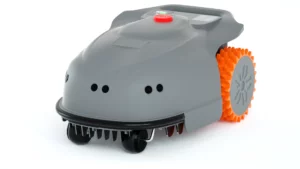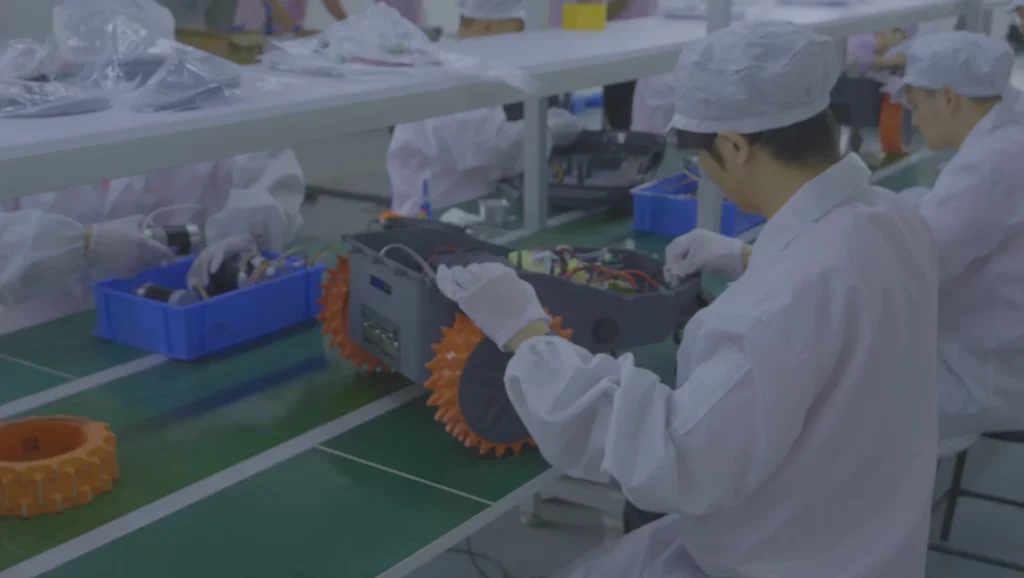







As the robotic lawn mower market continues to grow rapidly, global demand is increasing year by year. However, companies seeking to launch their own brands often face significant challenges, including substantial R&D investments and complex technical development. So how can businesses enter this market quickly and efficiently? This guide explains the key steps to building your own OEM robot mower manufacturing brand, from market trends and product selection to OEM/ODM manufacturing, brand design, and launch strategies.
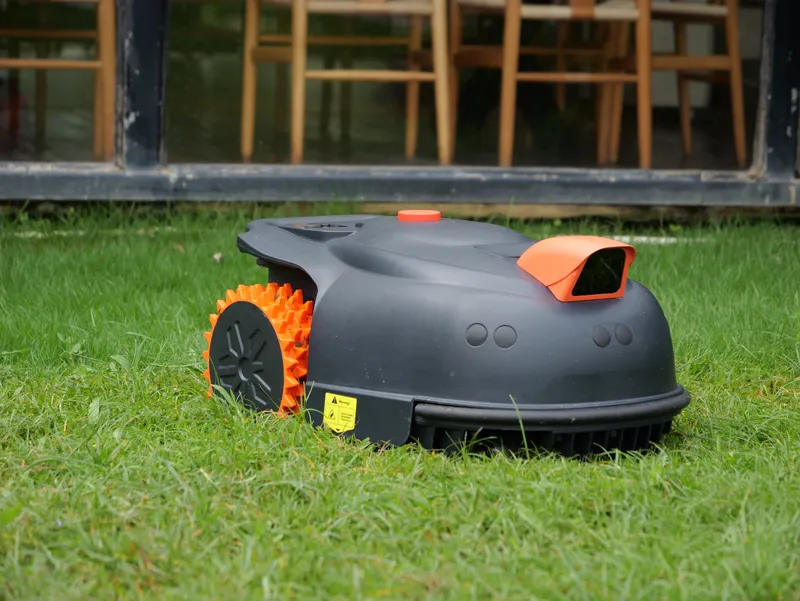
Why Launching a Proprietary Robotic Lawn Mower Brand Has Commercial Value
Robotic Lawn Mower Market Trends and Growth
According to a robotic lawn mower research report released by Grand View Research, the global robotic lawn mower market is projected to reach approximately $9.33 billion by 2025. It is expected to grow to around $21.97 billion by 2033, with a compound annual growth rate (CAGR) of approximately 11.4%. Two factors mainly drive this strong growth. First, intelligent navigation technologies such as RTK, vision navigation, and AI path planning are becoming more mature. Second, both residential and commercial users are increasingly seeking automated lawn maintenance solutions. As a result, more companies are exploring opportunities to launch their own private-label robotic lawn mower products.
Commercial Advantages of Private Label Robotic Lawn Mowers
Increased Profit Margins
Building a private-label robotic lawn mower brand allows companies to gain stronger pricing power and higher profit margins. Compared with traditional OEM distribution models, branded products enable businesses to establish long-term market value. In addition, branded products help companies build stable dealer and distribution networks. This strengthens long-term market competitiveness.
Product Differentiation
By customizing navigation systems, intelligent control algorithms, battery management systems (BMS), and user interfaces, companies can develop robotic mowers with unique features. Such differentiation improves product performance while also creating clear selling points in competitive markets.
Stronger Brand Trust
A reliable and well-designed robotic lawn mower brand can gradually build trust among distributors and end users. When products demonstrate stable performance over time, customers are more likely to become long-term partners. As a result, positive word-of-mouth helps drive sustainable sales growth.
Key Challenges When Launching a Robotic Lawn Mower Brand
Although the opportunity is significant, companies also face several challenges when entering the robotic lawn mower market.
High R&D Investment
Developing a high-performance robotic lawn mower requires significant technical resources. Key technologies include navigation systems, AI algorithms, sensor fusion, and intelligent path planning. These technologies usually require long-term investment and specialized engineering teams.
Complex System Integration
Robotic lawn mowers combine multiple technologies, including hardware platforms, embedded software, mobile robot control systems, sensors, and drive systems. Ensuring stable and reliable mowing performance requires seamless integration of these systems.
Long Product Development Cycles
From concept design to prototype testing and mass production validation, the development process can take a long time. Extensive testing is required to ensure reliability in different lawn environments and weather conditions. Therefore, many companies now choose to collaborate with experienced robotic lawn mower manufacturers. By working with professional OEM robotic lawn mower or ODM robotic lawn mower manufacturers, brands can leverage mature technology platforms and production capabilities. This significantly reduces development risk and shortens time to market.
Process for Establishing a Private Label Robotic Lawn Mower Brand
To successfully launch a private label robotic lawn mower brand, companies generally follow five key steps:
- Market research and positioning
- Product selection
- OEM/ODM manufacturing
- Brand design and packaging
- Market launch strategy
1. Market Research and Brand Positioning
Market research is the foundation of a successful robotic lawn mower brand. Accurate market insights guide product development, pricing strategies, and marketing plans.
Target Customer Analysis
Two main groups should be analyzed: Distributors and Channel partners, who often focus on product reliability, technical support, and brand positioning. End Users End users are more concerned about mowing efficiency, battery life, navigation accuracy, and smart features.
Functional Requirements Analysis
Based on market research, companies can define core product features, such as Navigation technology: GPS, LIDAR, or visual navigation. Smart functions: Remote control, automatic charging, and path planning. Battery performance: Battery capacity and charging efficiency based on usage scenarios
Pricing Strategy
Pricing should be determined through competitor analysis, feature comparison, and market demand evaluation. A reasonable price helps improve purchase intent and facilitates smoother distributor cooperation.
2. Selecting the Right Type of Robotic Lawn Mower
Choosing the correct product category is essential when developing a robotic lawn mower solution. Different robotic lawn mower types are designed for different lawn sizes, navigation technologies, and levels of customization.
Robotic Lawn Mower Types Comparison
| Type | Typical Application | Navigation Technology | Customization Level |
| Residential Robotic Lawn Mower | Home gardens, small lawns | Boundary wire, basic sensors | Low |
| Commercial Robotic Lawn Mower | Parks, golf courses, and large lawns | GPS, RTK, LIDAR | High |
| Professional Landscaping Models | Property maintenance, landscape companies | RTK, visual navigation | Medium–High |
Commercial robotic lawn mowers are designed for large lawn areas such as parks, golf courses, and public green spaces. These models usually support advanced navigation technologies and allow higher flexibility in features and hardware configuration. Residential robotic lawn mowers are typically designed for home gardens or small lawns. They usually rely on boundary wires or simple sensor systems for navigation and focus on cost efficiency and ease of use.
3. Using OEM/ODM Manufacturing to Reduce Development Costs
For many companies, OEM/ODM robotic lawn mower manufacturing is the fastest way to launch a new product. Compared with independent R&D, this approach significantly reduces development costs and shortens the product development cycle.
| Item | OEM Robotic Lawn Mower | ODM Robotic Lawn Mower |
| Development Method | Based on the existing platform | New product development |
| Customization Level | Logo, appearance, packaging | Full hardware and software customization |
| Development Time | Short | Longer |
| R&D Investment | Lower | Higher |
| Suitable For | New brands entering the market quickly | Brands seeking differentiated products |
Through OEM or ODM cooperation, brands can further customize: Product appearance, Functional modules, software features, pand ackaging design. Manufacturers can first produce prototypes for functional verification and market testing. After that, small-batch production can be arranged before full-scale manufacturing.
4. Brand Design and Packaging
Brand design plays an important role in market perception. A professional robotic lawn mower brand should maintain a consistent visual identity, including logo design, product appearance, and packaging style. At the same time, packaging should include clear instructions and user guides. This helps improve the overall user experience and product professionalism.
5. Market Launch Strategy
A strong launch strategy is critical for the success of a private label robotic lawn mower. Companies should combine both online and offline marketing channels.
Online channels include:
- B2B platforms
- e-commerce distribution
- digital marketing
Offline channels include:
- trade shows
- industry exhibitions
- dealer networks
Building a multi-level distribution system helps brands quickly expand their market coverage. In addition, providing technical training and after-sales support for distributors helps build stronger brand trust.
Steps to Build a Robotic Lawn Mower Brand
| Step | Key Focus | Purpose |
| Market Research | Identify target customers and competitors | Define brand positioning |
| Product Selection | Choose residential or commercial models | Match market demand |
| OEM/ODM Manufacturing | Work with a robotic lawn mower manufacturer | Reduce R&D cost |
| Brand Design | Logo, product appearance, packaging | Build brand identity |
| Market Launch | Sales channels and marketing strategy | Enter the market successfully |
Common Challenges and Manufacturer Support
When launching a robotic lawn mower brand, companies often face several practical challenges. Prototype testing can be difficult because robotic mowers must operate reliably under different grass conditions, slopes, and weather environments. Technical integration is also complex. Robotic lawn mowers combine motors, navigation systems, sensors, AI algorithms, and control boards. In addition, spare parts supply and after-sales service systems are essential for long-term brand success. Because of these challenges, many companies work with experienced robotic lawn mower OEM/ODM manufacturers. These manufacturers provide mature R&D platforms, standardized production processes, and stable supply chains. As a result, brands can shorten product launch cycles and focus more on marketing and brand development.
Why Partner with a Professional Robotic Lawn Mower Manufacturer
Technical Development Support
Professional robotic lawn mower manufacturers integrate advanced navigation systems, sensors, and AI algorithms into their platforms. This ensures high-precision mowing and intelligent path planning.
Stable Mass Production
Experienced manufacturers have mature production systems and strict quality control processes. This guarantees consistent product quality while supporting large-scale production.
Flexible Customization
Through OEM robotic lawn mower or ODM robotic lawn mower partnerships, brands can customize product design, functional modules, logos, and packaging.
Industry Experience
Established manufacturers bring extensive experience from multiple projects. They can support the entire process, including product design, prototype testing, and mass production.
Long-Term Strategic Cooperation
Manufacturers are not only suppliers but also strategic partners. They can provide complete robotic lawn mower solutions to help brands enter the market faster.
How to Quickly Build Your Own Robotic Lawn Mower Brand
1. Contact a Professional Robotic Lawn Mower Manufacturer
When starting a new project, it is important to work with an experienced robotic lawn mower OEM/ODM manufacturer. Companies should first define their brand positioning, target market, and core product requirements. Then they can discuss product configurations and cooperation models with the manufacturer. For example, companies like Altverse provide end-to-end robotic lawn mower solution services, covering product design, development, and production.
2. Conduct Prototype Testing
Before mass production begins, prototype testing is essential. Testing should verify navigation stability, mowing performance, and battery life under real lawn conditions.
3. Confirm Product Customization
After testing, companies can finalize product functions, appearance design, and production volume. At this stage, the manufacturer will confirm technical parameters and production schedules to move toward mass production.
4. Prepare Marketing and Sales Channels
While manufacturing begins, brands should simultaneously plan marketing campaigns, channel partnerships, and after-sales support systems. This ensures the robotic lawn mower brand can quickly enter target markets once products are ready. By following these steps, companies can efficiently launch their own private label robotic lawn mower products, reduce development risks, and rapidly capture market opportunities.
FAQ
How long does it take to establish a robotic lawn mower brand?
The timeline depends on the product development approach. If a company customizes an OEM robotic lawn mower based on an existing platform, the product may be ready within a few months. However, developing an ODM robotic lawn mower with deeper customization requires more time for feature development, testing, and production validation.
What aspects can be customized for a proprietary robotic lawn mower brand?
In OEM/ODM robotic lawn mower cooperation, brands can customize product appearance, logos, navigation technologies, battery capacity, mobile app interfaces, and packaging solutions. These customization options help companies create differentiated robotic lawn mower products.
Why do many companies choose OEM/ODM manufacturing to build robotic lawn mower brands?
Using OEM or ODM robotic lawn mower manufacturing allows companies to leverage mature technology platforms and production capabilities. This significantly shortens development cycles and reduces technical risks. As a result, businesses can focus more on marketing, distribution, and brand building.
Turn Your Robotic Mower Vision Into Production
Custom OEM/ODM manufacturing — PCBA, assembly, and logistics from one partner.
- Fast turnaround from design to delivery
- Trusted by brands across the globe
- Free DFM review before you commit
- Dedicated engineer within 24 hours

Expert in robotics, passionate about exploring a wide range of robots, robots that make work more efficient, exploring robots, including mobile robots, lawnmower robots.