









Different people have different choices when it comes to lawn mowers; however, the types of mowers that people are choosing today are centered on two: robotic mowers and traditional mowers. These two types of mowers bring solution solutions to lawn care, each with their own advantages and disadvantages.
However, when comparing the different types of mowers, robotic mowers prove to be the better choice for a variety of reasons.
If you wish to know more about robotic lawn mowers and conventional lawn mowers and how they differ, read the guide below and you will get a detailed understanding.
What is Robot Lawn Mower?
The Robot Mower is an innovative and technologically advanced device designed to automate and optimize lawn care tasks. It combines sensors, connectivity and automation features to provide a more convenient and efficient lawn mowing experience.
The automatic walking function prevents collisions, eliminates the need for peripheral wiring, automatically returns to charge, features safety detection and battery level detection, and has some climbing ability, making it a particularly suitable device for lawn mowing and maintenance in home yards, public green spaces, and other places.
Structure Of Robot Lawn Mower
The structure of the robotic lawn mower has various components as follows:
1, a robotic lawn mower robot basic structure, including a base plate, two walking motors, a mowing motor, two synchronous belt drive, four wheels
2, the body has a sensor that makes it possible to automatically avoid obstacles, such as cameras, 3D radar, ultrasonic radar, so that the lawn mower in the mowing time can be intelligent obstacle avoidance, avoiding pets and flowers and so on.
3, with automatic positioning sensors, RTK and other satellite positioning.
How Does Robot Lawn Mower Work?
Robotic lawn mowers are automated through the following key steps.
1: Sensors and Navigation
A sensor is a device that senses a physical change and causes an effector to respond. A fully functional lawn mower robot must have a variety of sensors working in concert, including: ultrasonic sensors, infrared sensors, temperature sensors, pyroelectric infrared sensors, contact sensors, and so on. Among them, the ultrasonic sensor can be used to measure the distance between the robot and the obstacle, when this distance is within the blind spot of ultrasonic detection, the infrared sensor will be activated, due to the use of ultrasonic sensors will also be affected by the temperature, so it is necessary to use temperature sensors to correct the distance formula to get accurate results, which is conducive to the robot to respond correctly to the status quo. The pyroelectric infrared sensor is designed to protect people and animals when the mower is in use, and will trigger a warning device to suspend operation when it catches a temperature change within a certain range. The contact sensor is set up for the consideration that when the mower touches an object, it can react quickly and stop working to improve its safety performance.
2: Boundary lines or virtual fences:
In many cases, the installation process requires the setting of boundary lines (usually buried wires) or the use of a GPS system to let the mower know its work area. This prevents the robot from going where it shouldn’t.
- Automatic path planning:
Robotic mowers automatically plan mowing paths based on an algorithm to ensure that the entire lawn is covered. Different models may use different mowing patterns, some randomly, others following a systematic trajectory.
- Battery power and charging capabilities:
Robotic lawn mowers usually use rechargeable batteries as a power source. When the battery is low, the mower automatically returns to a charging station for recharging and continues to work when fully charged.
- Mowing mechanism:
Robotic lawn mowers are equipped with rotating blades on the bottom, similar to traditional lawn mowers, but the blades are usually smaller and are suited for frequent mowing of the lawn rather than a one-time cut. Regular mowing helps keep your lawn healthy and the resulting grass clippings fall off automatically and become natural fertilizer.
- Smart control and remote management:
Modern robotic lawn mowers can often be controlled and monitored remotely through a mobile app or smart home system. Users can set mowing times, adjust heights, and even view the machine’s real-time location.
Overall, robotic lawn mowers achieve automated and efficient lawn maintenance through autonomous navigation, sensor detection and smart algorithms, making them suitable for routine maintenance of small to medium-sized lawns.
Types Of Robot Lawn Mower
1. RTK Robot Lawn Mower
RTK robotic lawn mower adopts advanced RTK positioning technology to realize high-precision automatic lawn mowing without manual involvement, saving time and cost.RTK lawn mower has a lot of advantages, intelligent planning path, intelligent barriers, with anti-collision function, to ensure the safe maintenance of the lawn.
RTK mowers have an environmentally friendly design compared to traditional mowers, with low noise operation, the sound generated by mowing will not disturb daily life.
Suitable for residential and commercial environments, RTK mowers can be used in a variety of lawn maintenance and are a trusted robotic lawn mower solution. 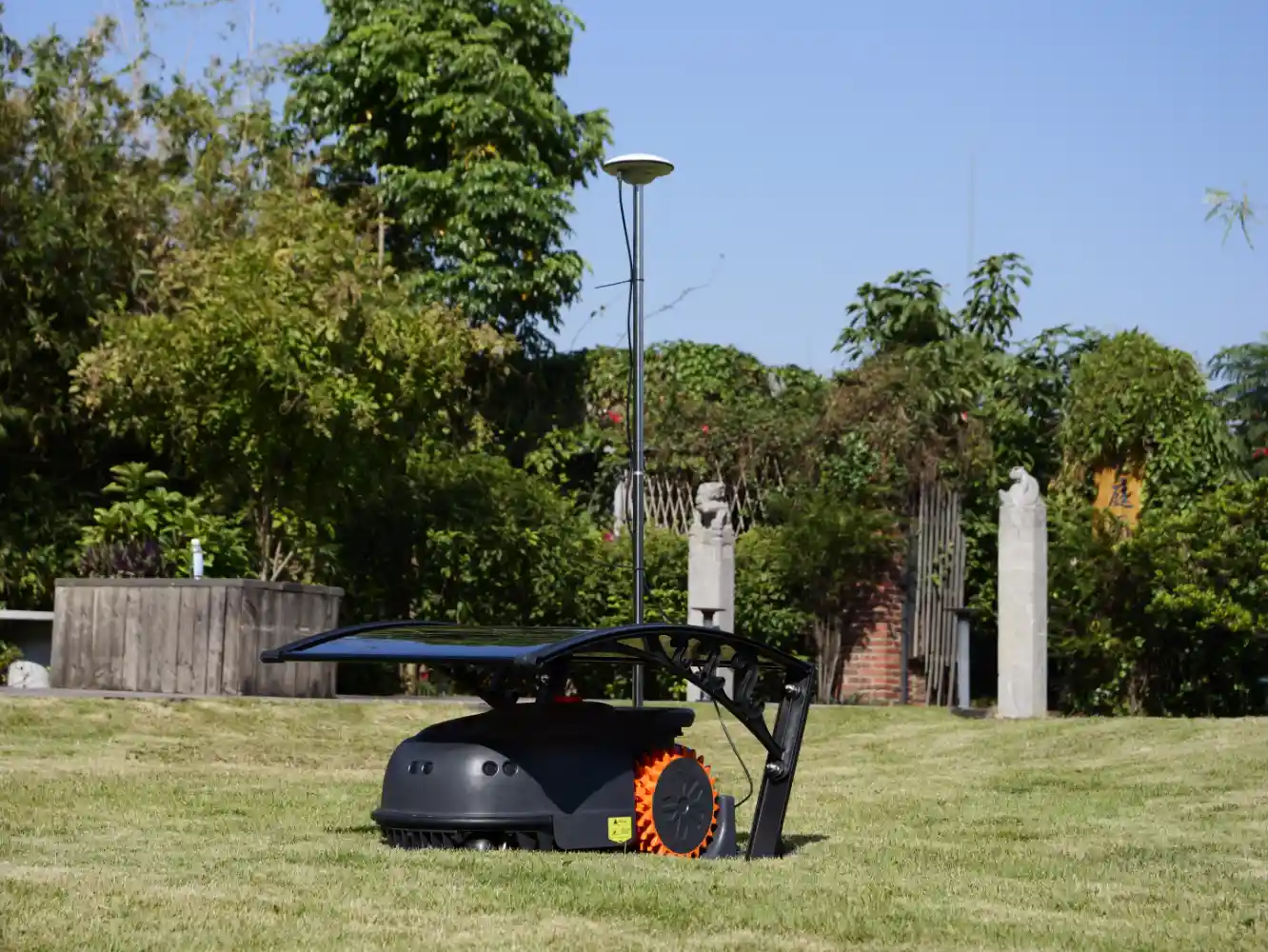
Ai Smart Lawn Mower
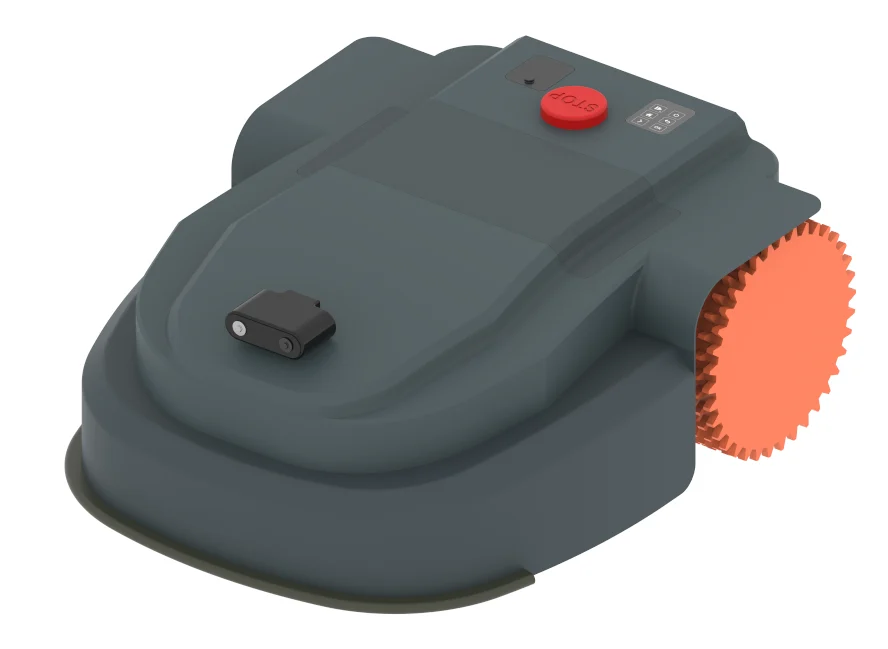
Ai smart lawn mower is usually made by the fusion of camera, radar, ultrasonic and other sensors. The core of the ai lawn mower is its ability to learn from its environment and make its own judgment.
The following are the main features of Ai lawn mower.
- Environment Sensing: Ai mower is equipped with a variety of sensors, such as LIDAR, camera, ultrasonic, can be real-time sensing of the surrounding environment, recognizing lawn boundaries, identifying obstacles, stones, pets and so on. It automatically avoids obstacles and ensures safe operation.
2.Robot Learning. With AI lawn mowers can continuously learn and optimize their own behavior through operational data. For example, it can learn the growth rate of the lawn, the impact of weather changes on mowing, etc., so that the optimal time to start mowing automatically to ensure the health and beauty of the lawn.
- Autonomous decision-making ability. ai lawn mower through the algorithm, can autonomously plan the mowing path, identify the lawn boundary, without artificial participation.
Lifetime of Robot Lawn Mower Products
Intelligent lawn mower service life is generally more than 10 years, pay attention to the maintenance of robotic lawn mower service life will be longer.
- Regularly charge the mower to delay the use of the mower battery.
- Clean the mower regularly to keep the body clean.
- Prevent the mower from being stored in a dry and ventilated environment.
Where to use Robot lawn mower?
Robotic lawn mowers are used in a wide variety of locations including residential and commercial environments. In residential environments the mowers can maintain residential lawns from 50-5000 square feet. In commercial settings such as golf courses, soccer fields, and large shopping malls, robotic mowers can maintain up to 12 acres of lawn.
What is Traditional Lawn Mower?
Traditional lawn mower is a kind of lawn mower that needs manual operation, generally relying on mechanical power to drive the blade, through the hand push or people driving equipment to complete the mowing, according to the different power sources and operation, traditional lawn mowers can be divided into the following categories
- Fuel oil mowers. Fuel mowers usually use gasoline or diesel engine as power, suitable for larger lawns. Operation requires manual control of the direction and speed by hand, and the machine needs to be started by pushing a button handle or pulling a starter rope. Because of its high power, a gasoline mower will make a lot of noise and emit a lot of waste when mowing.
- Push mowers. Push mowers do not rely on electric or fuel power, but rely entirely on human power to mow the lawn by rolling the blades and trimming the grass. Simple structure, suitable for small lawn maintenance, but requires more physical strength.
- Riding mowers. Ride-on mowers are similar to small tractors that can be operated while sitting on the machine, and are suitable for large lawns, such as golf courses, farms, and other commercial scenarios. Riding lawn mowers are usually oil-powered, powerful and relatively expensive.
- Electric mowers. Electric lawn mowers use electricity as a power source and are categorized into two types: wired and wireless. Wired electric mower by plugging the use of electricity, suitable for 200 square feet of lawn; wireless mower using rechargeable batteries, although mobile convenient but limited by the battery life time. Electric mowers are quieter and more environmentally friendly, but have less power than fuel mowers.
Traditional Lawn Mower Construction and Working
traditionally lawn mower consists of several key components to ensure its efficient operation. The core components include a power source (fuel engine or electric motor), which is responsible for driving the movement of the mower and rotation of the blades; a blade system, usually a rotating blade, which is used to cut the lawn; wheels, which are used to move the mower; a mowing height adjuster, which allows the user to set different mowing heights; and a grass clippings disposal system, such as a collection bag or a grass discharge device, which is used to manage the clippings after the cut grass has been cut. The operator manually pushes or drives the mower in order to accomplish the task of mowing the lawn.
Applications of Traditional Lawn Mower
Traditional lawn mowers are widely used, as long as they are used for the following;
- home lawn maintenance: traditional lawn mowers are widely used for daily mowing of home gardens and lawns, helping to keep the lawn beautiful and tidy.
- Small rural and field management: Some small farms and field zones use traditional mowers to manage weeds between grass and crops, promoting healthy crop growth.
- Preparation of event venues: Preparing outdoor event venues, such as weddings, parties, and sporting events, ensures that the venues are neat and tidy.
Sustainability of Traditional Lawn Mower
– Energy efficiency benefits: While the energy efficiency of conventional mowers varies by type, electric mowers typically consume less energy than oil-fired mowers, reducing dependence on fossil fuels.
– Durability and Long-Term Use: Conventional lawn mowers are typically designed to be more rugged in construction and can last for years with reasonable maintenance. This durability helps reduce the frequency of replacement and reduces resource consumption and waste.
The Difference Between Robot Lawn Mower and Traditional Lawn Mower
The differences between robotic lawn mowers and traditional lawn mowers are as follows:
Operation mode: smart mowers are equipped with automation functions, which realize autonomous mowing through built-in sensors and AI technology, without the need for manual operation. Traditional mowers, on the other hand, rely on human operation and need to be pushed or driven manually.
Efficiency and Accuracy: Smart mowers are able to automatically plan mowing paths, avoid obstacles and adjust to lawn conditions to provide more precise mowing results. The efficiency and precision of a traditional mower relies on the experience and skill of the operator.
Energy efficiency: Smart mowers are usually battery-powered, which automatically optimizes energy use and reduces energy waste. Among traditional mowers, fuel mowers consume more energy and have a negative impact on the environment.
Noise and the environment: Smart mowers are usually quieter and friendlier to the environment than traditional fuel mowers. Electric mowers are quieter and more environmentally friendly, but lack the automation benefits of smart mowers.
Longevity: Smart mowers typically have a longer lifespan and regular software updates can improve performance. Conventional mowers are dependent on how well they are maintained, especially fuel mowers which require regular servicing.
Cost-effectiveness: Smart mowers have a higher initial cost, but in the long run, they are likely to deliver higher efficiency and lower labor costs due to their automation and time-saving benefits. Conventional mowers are more economically priced, but require more labor input.
These differences suggest that smart mowers are superior in terms of energy efficiency, environmental friendliness and convenience, while traditional mowers remain suitable for cost-sensitive users and small areas of lawn maintenance.
ANSWER: Which is the Better Mower Solution: Robot Lawn Mower or Traditional Lawn Mower?
When choosing between a robot lawn mower and a traditional mower, the robot mower performs better with its automated operation, accuracy and energy efficiency. It requires no human intervention and is able to plan and mow on its own, which greatly enhances convenience. The lack of human involvement is good for people’s health in the long run, as years of operating traditional lawn mowers can lead to knee pain, lower back pain, leg pain, and other physical discomforts, making robotic lawn mowers a better choice in terms of effectiveness and health.
Your Custom and OEM Robot Lawn Mower Manufacturer and Supplier
Contact us
We are a Chinese manufacturer of robotic lawn mowers, we help our customers to build customized and semi-customized robotic lawn mowers with customer logos and designs
Turn Your Robotic Mower Vision Into Production
Custom OEM/ODM manufacturing — PCBA, assembly, and logistics from one partner.
- Fast turnaround from design to delivery
- Trusted by brands across the globe
- Free DFM review before you commit
- Dedicated engineer within 24 hours

Expert in robotics, passionate about exploring a wide range of robots, robots that make work more efficient, exploring robots, including mobile robots, lawnmower robots.


