







Introduction
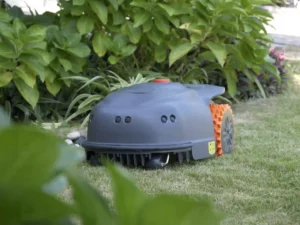
Robotic lawn mowers have rapidly evolved from niche garden gadgets into mainstream smart home devices. With the rise of autonomous lawn care solutions, more homeowners, facility managers, and landscapers are turning to robotic mowers to save time, reduce labor costs, and achieve consistently neat lawns.
According to industry reports, the global robotic lawn mower market is expected to grow at a CAGR of over 15% between 2023 and 2030. This growth is driven by advances in navigation systems, artificial intelligence, battery technology, and connectivity.
But what makes robotic lawn mowers truly work? In this article, we will explore the key technologies of robotic lawn mowers, covering everything from navigation and sensors to cutting systems, batteries, software, and safety features.
1. Navigation and Positioning Technologies
1.1 Random Navigation (First-Generation Mowers)
Early robotic mowers relied on boundary wires and random movement. While simple, this method:
-
Required time-consuming installation of perimeter wires.
-
Produced uneven mowing patterns.
-
Wasted battery power and reduced efficiency.
1.2 GPS and RTK GNSS Precision Navigation
Modern robotic lawn mowers increasingly use GPS-based Real-Time Kinematic (RTK) navigation to achieve centimeter-level accuracy .
-
Advantages:
-
No boundary wire required.
-
Straight mowing lines comparable to professional landscaping.
-
Efficient coverage of large lawns and commercial areas.
-
-
Limitations:
-
Requires a stable satellite signal.
-
Performance may degrade under trees or near tall buildings.
-
Example: Husqvarna’s Automower NERA series uses RTK navigation to achieve consistent striping patterns.
1.3 Vision-Based Navigation
Another breakthrough is camera-based navigation, using SLAM (Simultaneous Localization and Mapping).
-
Benefits: Works without GPS; recognizes obstacles and lawn edges.
-
Challenges: Sensitive to low light or bad weather.
One important debate is whether to use monocular (single-lens) or binocular (stereo) vision systems.
Comparison: Monocular vs Binocular Vision
| Feature | Monocular Camera (Single-Lens) | Binocular Camera (Stereo Vision) |
|---|---|---|
| Depth Perception | Estimated via AI algorithms, less accurate | True depth perception using two viewpoints |
| Cost | Lower (affordable for residential models) | Higher (more sensors, more processing power) |
| Complexity | Simpler integration, lower CPU usage | Requires higher computing power and calibration |
| Performance in Obstacles | Good for 2D recognition (edges, colors, objects) | Better for 3D mapping, obstacle height detection |
| Use Case | Entry-level and mid-range robotic mowers | High-end robotic mowers with advanced navigation |
1.4 Hybrid Navigation
High-end mowers now combine RTK GNSS + Vision + IMU sensors, ensuring accuracy even when one method fails. This hybrid approach is shaping the next generation of autonomous lawn mowers.
2. Sensor Technologies
2.1 Ultrasonic and Infrared Sensors
-
Detect nearby obstacles (trees, toys, pets).
-
Low-cost and commonly used in entry-level models.
2.2 LiDAR (Light Detection and Ranging)
LiDAR provides high-resolution 2D/3D mapping and enables precise obstacle detection. There are two main types: mechanical rotating LiDAR and solid-state LiDAR.
Comparison: Solid-State LiDAR vs Mechanical LiDAR
| Feature | Solid-State LiDAR | Mechanical Rotating LiDAR |
|---|---|---|
| Durability | No moving parts → More reliable, long lifespan | Mechanical wear and tear over time |
| Size & Weight | Compact and lightweight | Larger, bulkier |
| Cost | Currently higher (newer technology) | More affordable, widely available |
| Field of View (FOV) | Typically narrower (requires multiple sensors for 360°) | Can achieve 360° with rotating head |
| Power Consumption | Lower | Higher |
| Best For | Consumer and commercial mowers needing reliability | Experimental or cost-sensitive mowers |
2.3 Lift and Tilt Sensors
-
Instantly stop the blade when the mower is lifted or tipped.
-
Prevents injuries and enhances safety compliance.
2.4 Collision and Bumper Sensors
-
Provide physical feedback when hitting objects.
-
Still widely used as a safety backup even in AI-driven models.
3. Drive Systems and Motors
3.1 Wheel Drive
Robotic lawn mowers typically use brushless DC (BLDC) motors for wheel drive.
-
High torque, low noise, long lifespan.
-
Allow climbing of slopes up to 35–45% gradient depending on the model .
3.2 Steering Mechanisms
-
Differential Drive: Simple, affordable, ideal for small gardens.
-
Ackermann Steering: Inspired by automotive systems; provides smoother, straighter paths for large lawns.
-
Tracked Drive: Rare but effective for uneven or muddy terrain.
4. Cutting Systems and Blade Technology
4.1 Rotary Blades
-
Lightweight, sharp, and efficient.
-
Common in residential models.
4.2 Fixed Disc Blades
-
Heavy-duty and durable.
-
Suitable for thick or tall grass in commercial mowing.
4.3 Floating Cutting Decks
-
Automatically adjust to lawn unevenness.
-
Deliver consistent cutting height across varied terrain.
4.4 Cutting Patterns
-
Random Mowing: Cheaper, but inefficient.
-
Systematic Mowing: GPS/RTK enables straight-line mowing, saving 30–50% energy .
-
Zone Management: Users can define zones via mobile apps for precision mowing.
5. Battery and Charging Technologies
Choosing the right battery type is critical for performance and safety.
Comparison: Lithium-Ion vs LiFePO4 Battery
| Feature | Lithium-Ion (Li-ion) | Lithium Iron Phosphate (LiFePO4) |
|---|---|---|
| Energy Density | Higher (lighter, more compact) | Lower (heavier for same capacity) |
| Cycle Life | ~800–1,000 charge cycles | 2,000–3,000 charge cycles [6] |
| Safety | Higher thermal runaway risk | Very stable and safe |
| Cost | More affordable | More expensive (but prices falling) |
| Use Case | Residential robotic mowers | Commercial, heavy-duty robotic mowers |
5.1 Automatic Charging
-
Mowers autonomously return to the charging dock when low on battery.
-
Some models support wireless inductive charging, reducing maintenance.
5.2 Coverage Capacity
-
Residential models: 500–2,000 m² per charge.
-
Commercial models: 5,000–20,000 m² or more .
6. Software, AI, and Algorithms
6.1 SLAM Mapping
-
Enables real-time mapping of the environment.
-
Adapts to changing conditions such as new garden furniture or seasonal growth.
6.2 AI Grass Recognition
-
Distinguishes grass from flowerbeds, driveways, or gravel.
-
Reduces accidental trimming of plants.
6.3 Adaptive Path Planning
-
Learns lawn size, grass growth rate, and mowing history.
-
Optimizes mowing schedule for efficiency and energy savings.
6.4 Connectivity and IoT
-
Mobile apps allow remote control, scheduling, and monitoring.
-
Integration with Alexa, Google Assistant, and smart home hubs.
-
Cloud data enables OTA (Over-the-Air) updates for new features.
7. Safety and Security Systems
One of the most important aspects of robotic lawn mowers is waterproofing and weather resistance, measured by IP rating.
Comparison: IP Ratings in Robotic Lawn Mowers
| IP Rating | Meaning | Protection Level | Example Use Case |
|---|---|---|---|
| IPX4 | Splash-proof | Protects against light rain, splashes | Entry-level residential mowers |
| IPX5 | Water jets resistant | Can withstand low-pressure water jets | Mid-range mowers, outdoor use |
| IPX6 | Strong water jets resistant | Withstands high-pressure cleaning jets | High-end residential and commercial mowers |
| IPX7 | Immersion up to 1m water | Full waterproofing | Rare in mowers, mainly outdoor electronics |
7.1 Safety Stops
-
Blade stops instantly if the mower is lifted, tilted, or obstructed.
7.2 Anti-Theft Features
-
PIN code lock.
-
GPS tracking and geofencing.
-
Alarm systems.
8. User Experience and Smart Features
8.1 Mobile Apps
-
Real-time monitoring of mowing progress.
-
Virtual boundary setup without wires.
-
Maintenance alerts and usage history.
8.2 Smart Home Integration
-
Voice control via Amazon Alexa, Google Home, Apple HomeKit.
-
Synchronization with weather forecasts to avoid mowing in rain.
8.3 OTA Software Updates
-
Extends the product lifecycle.
-
Adds new AI features over time.
9. Future Trends in Robotic Lawn Mowers
-
Multi-Modal AI Sensing
-
Combining LiDAR, cameras, ultrasonic sensors, and microphones for human-like perception.
-
-
Green Energy Integration
-
Solar-assisted charging systems for sustainability.
-
-
5G and Edge Computing
-
Real-time cloud-based monitoring and fleet management.
-
-
Modular Design
-
Interchangeable blades, batteries, and wheels for customized use.
-
-
Commercial Expansion
-
From residential lawns to sports fields, golf courses, and public parks.
-
This article covers the technology building blocks. For the full business perspective — how to source, customize, and manufacture your own robot lawn mower in China — read our complete guide to robot lawn mower OEM/ODM in China.
Conclusion
The key technologies of robotic lawn mowers include advanced navigation systems, multi-sensor integration, efficient drive motors, precision cutting mechanisms, long-lasting batteries, AI-driven software, and strong safety protections.
Together, these innovations are transforming lawn care into a fully automated, eco-friendly, and intelligent process. As RTK positioning, AI vision, and green energy solutions become more widespread, robotic lawn mowers will continue to evolve — offering smarter, safer, and more efficient lawn care solutions for homes and businesses alike.
FAQ: Key Questions About Robotic Lawn Mowers
Q1: How does a robotic lawn mower navigate without a boundary wire?
A: Modern robotic mowers use RTK GNSS navigation or vision-based SLAM mapping to operate without boundary wires. These systems allow precise lawn mapping, virtual boundaries, and straight-line mowing.
Q2: What is the difference between monocular and binocular vision in robotic mowers?
A: Monocular cameras use AI algorithms to estimate depth, making them affordable but less accurate. Binocular (stereo) vision provides true depth perception, better obstacle detection, and is used in high-end models.
Q3: Why is LiFePO4 considered better than standard lithium-ion batteries?
A: LiFePO4 batteries have a much longer cycle life (2,000–3,000 cycles vs. 800–1,000 cycles for Li-ion) and higher safety against overheating. They are more common in commercial-grade robotic mowers.
Q4: Can robotic lawn mowers work in the rain?
A: Yes, most robotic mowers have IPX4–IPX6 waterproof ratings, meaning they can handle rain and outdoor conditions. However, mowing in heavy rain is not recommended for safety and performance reasons.
Q5: What safety features do robotic lawn mowers have?
A: Common features include lift and tilt sensors (stopping blades instantly when lifted), collision sensors, PIN code security, and GPS anti-theft tracking.
Q6: How large an area can robotic lawn mowers cover?
A: Residential robotic mowers typically cover 500–2,000 m² per charge, while commercial models can handle 5,000–20,000 m² or more, depending on battery size and navigation system.
Q7: Are robotic lawn mowers eco-friendly?
A: Yes. They are battery-powered, producing zero direct emissions, and their frequent mowing creates fine clippings that act as natural fertilizer (mulching effect).
Turn Your Robotic Mower Vision Into Production
Custom OEM/ODM manufacturing — PCBA, assembly, and logistics from one partner.
- Fast turnaround from design to delivery
- Trusted by brands across the globe
- Free DFM review before you commit
- Dedicated engineer within 24 hours

Expert in robotics, passionate about exploring a wide range of robots, robots that make work more efficient, exploring robots, including mobile robots, lawnmower robots.