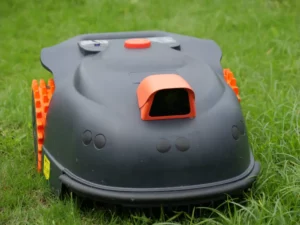








RTK (Real-Time Kinematic) technology is the core enabler for robotic lawn mowers to achieve centimeter-level precision navigation and efficient operation. Leveraging a mature RTK solution, robotic lawn mowers can maintain continuous, stable operation for 10–15 minutes even during signal attenuation or temporary loss, eliminating operational interruptions in complex environments.

Challenges in Navigating Robotic Lawn Mowers in Weak Signal Environments
Autonomous robotic lawn mowers heavily rely on satellite positioning signals. Weak signal environments are common in real-world outdoor applications. Dense tree shade in private gardens or building obstructions in municipal green spaces can directly impact RTK positioning accuracy, triggering operational issues:
1. Signal Attenuation / Temporary Loss
Deviation in mowing paths can result in missed edges, redundant internal trimming, and compromised work quality.
2. Reduced Navigation Accuracy
Fails to maintain preset mowing patterns, increasing idle time and lowering overall efficiency.
3. Operation Interruptions and Manual Intervention
Device shutdowns due to signal loss require manual restarts or path replanning, significantly increasing operational costs.
Reliable RTK solutions overcome these limitations through advanced hardware, intelligent software, and system-wide optimization, ensuring robotic mowers achieve continuous, precise autonomous operation even in weak-signal environments.

Core Architecture of RTK Solutions for Weak-Signal Adaptive Robotic Lawn Mowers
The robotic lawn mower RTK solution adopts an end-to-end design based on “hardware foundation + software empowerment + system synergy.” Through multi-technology integration, it ensures dual guarantees of positioning accuracy and operational stability. Its core components include:
1. High-Performance Hardware
Hardware is the foundation of RTK positioning. Weak-signal design prioritizes signal reception and anti-interference capabilities:
Full-Constellation, Full-Frequency Multi-System Compatibility
Supports GPS, BeiDou, GLONASS, and Galileo, receiving signals from over 40 satellites simultaneously to enhance positioning stability.
High-Gain Anti-Obstruction Antenna
Designed for a high signal-to-noise ratio, maintaining stable satellite signal reception even under tree shade or building obstructions.
Integrated Anti-Interference Module
Incorporates bandpass filtering and active amplification to filter electromagnetic interference, improving raw signal integrity for precise positioning.
2. Intelligent Software
Software algorithms are crucial for handling weak signal fluctuations and hardware limitations:
Advanced Filtering Algorithms
Optimized algorithms minimize positioning errors caused by environmental noise and satellite fluctuations, thereby enhancing data stability.
Robustness Enhancement Design
Dynamic compensation strategies for brief signal drops or temporary loss prevent task interruptions and ensure continuous mowing paths.
Differential Protocol Optimization
Optimized RTCM differential data formats reduce communication load and improve data transfer efficiency in weak network/signal conditions.
3. System-Wide Collaborative Optimization
System-level integration resolves operational interruptions in weak signal areas:
Multi-Sensor Fusion Navigation
Combines RTK positioning with IMUs, wheel encoders, and other sensor data to form a “satellite positioning + inertial navigation” solution. Even if satellite signals are lost, inertial data maintains precise navigation.
Real-Time Dynamic Correction
Adjusts mower movement based on signal strength. In weak signal areas, operating speed is reduced, and data sampling frequencyis increased to maintain path accuracy.
Resume-from-Breakpoint Functionality
Automatically continues the previous mowing path after signal recovery, avoiding redundant operations and enhancing efficiency.
Core Advantages of RTK Solutions for Robotic Lawn Mowers
Weak Signal Adaptability Across All Environments
Operates reliably in residential yards, municipal green spaces, and agricultural areas.
Significant Cost Reduction and Efficiency Gains
Reduces wasted labor from interruptions and path deviations, minimizes manual intervention, and decreases maintenance costs. One unit can replace the workload of 3–5 workers.
Precision and Efficiency in Operation
Centimeter-level positioning accuracy ensures no missed or repeated cuts. Edge trimming within 2 inches improves lawn uniformity.
Enhanced Product Competitiveness
Supports B2B manufacturers in developing differentiated products, improving end-user satisfaction and brand reputation, and meeting global market demands.
Why Weak-Signal RTK Solutions Matter
As robotic mowers move toward full-scenario autonomous operation, positioning stability and reliability in weak-signal environments are critical. The solution integrates:
- Full-constellation, full-frequency hardware
- Intelligent software algorithms
- Multi-sensor fusion
It ensures precision under weak signals and uninterrupted operation during signal loss, resolving mowing challenges in complex environments.
Cooperation Inquiry Guide
For B2B partners seeking:
- Device adaptation modifications
- Customized development
- Sample testing
- Bulk supply policies
Contact us to be assigned a technical consultant to develop tailored solutions.
Consultation tip: specify your role (distributor/ODM/OEM/technical decision-maker), target device models, and application scenarios for efficient matching.
FAQs
How long can an RTK robotic lawn mower operate continuously when RTK signals are lost?
With a weak-signal adaptive RTK solution, an RTK robotic lawn mower can maintain continuous operation for approximately 10–15 minutes under weak or temporarily lost RTK signals. This is achieved through multi-sensor fusion combining RTK positioning, IMU, and wheel encoders, enabling real-time position estimation and path continuity.
Which satellite systems are supported by RTK robotic lawn mowers?
RTK robotic lawn mowers support all four major global satellite systems: GPS, BeiDou, GLONASS, and Galileo. Full-constellation, full-frequency reception ensures stable and accurate positioning across global markets and diverse outdoor environments.
How does multi-sensor fusion work in RTK robotic lawn mowers under weak signal conditions?
When satellite signals are strong, the RTK lawn mower relies on centimeter-level RTK positioning as the primary navigation source. When signals weaken or are temporarily lost, the system automatically switches to IMU and wheel encoder fusion. By integrating multiple sensor inputs, the RTK robotic lawn mower maintains positioning accuracy and stable mowing paths in weak signal environments.
Can RTK robotic lawn mowers operate reliably on complex terrains such as slopes and wetlands?
Yes. RTK robotic lawn mowers are designed with a triple safeguard mechanism that includes high-performance hardware, multi-sensor fusion navigation, and dynamic parameter adjustment. This allows stable operation on slopes exceeding 30° and in challenging terrains such as wetlands, embankments, and uneven ground.
Is installing an RTK robotic lawn mower complicated for end users?
Installation is straightforward. The RTK module adopts a modular design and is compatible with mainstream robotic lawn mower platforms. Factory calibration simplifies deployment, and users can complete installation and basic RTK initialization by following the manual or companion app, without requiring technical expertise.
Does using an RTK solution significantly increase power consumption in robotic lawn mowers?
No. RTK robotic lawn mowers are designed with low-power hardware and intelligent power management algorithms. Power consumption typically increases by less than 5% compared to standard GPS-based systems, with no noticeable impact on overall runtime.
Does the RTK module in robotic lawn mowers require regular maintenance?
Routine maintenance is minimal. RTK modules are usually designed with waterproof and dustproof protection (IP67 or higher), suitable for outdoor use. Under normal conditions, only occasional cleaning of the antenna surface is required to maintain optimal RTK signal reception.
How do RTK robotic lawn mowers prevent re-mowing after signal recovery?
RTK robotic lawn mowers use resume-from-breakpoint and path-memory functions to continuously record completed mowing paths. After RTK signal recovery, the system accurately identifies unfinished areas and resumes operation from the exact breakpoint, avoiding redundant mowing and improving overall efficiency.
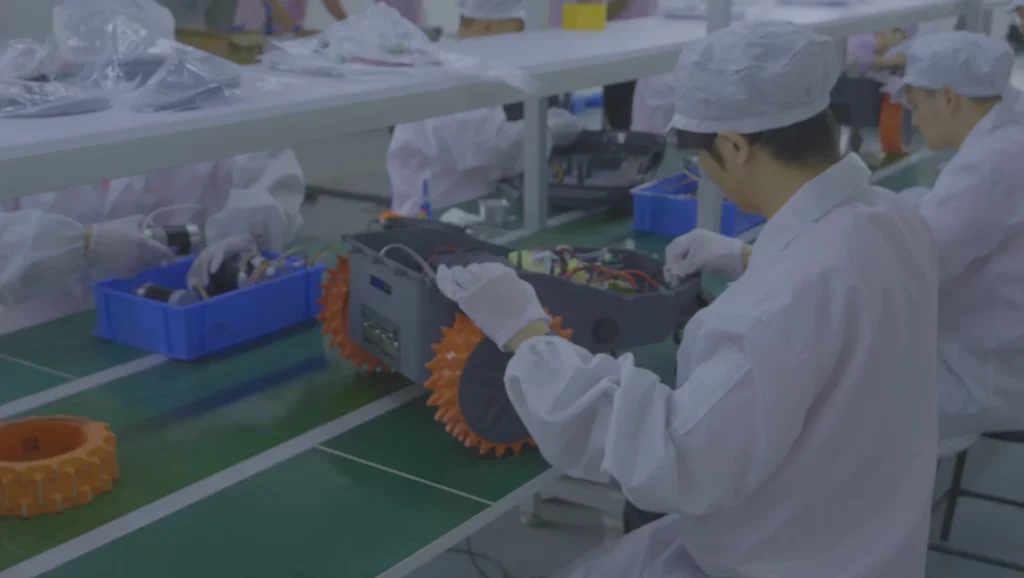
Turn Your Robotic Mower Vision Into Production
Custom OEM/ODM manufacturing — PCBA, assembly, and logistics from one partner.
- Fast turnaround from design to delivery
- Trusted by brands across the globe
- Free DFM review before you commit
- Dedicated engineer within 24 hours

Expert in robotics, passionate about exploring a wide range of robots, robots that make work more efficient, exploring robots, including mobile robots, lawnmower robots.